If Italian wines are amongst the best in the world, surely much of the credit must be given to the reputation of our classic great full-bodied red wines, well-structured and properly aged.
If Italian wines are amongst the best in the world, surely much of the credit must be given to the reputation of our classic great full-bodied red wines, well-structured and properly aged.
The production of exceptional wine bottles obtained from exclusive native vines that, in very few cases, manage to grow elsewhere is one of the hallmarks of Italian viticulture. Climate is certainly a fundamental component and, together with terroir, forms an essential foundation for bottles beloved worldwide. To this must be added the long winemaking tradition and thus the producers’ ability to create unique and highly regarded wines.
From north to south, a multitude of vines that yields splendid examples exported across the globe each year: starting from the coldest areas such as Piedmont, passing through Veneto and Lombardy, from Tuscany to Abruzzo, then moving south from Salento to Sicily and finally to Sardinia. An extremely wide variety of full-bodied red wines that reflect the regions of our territory and honour our age-old tradition.
Red wine, by definition, is a wine characterised by structure and softness; at the same time, it contains lower acidity and salinity compared to white grape varieties. What sets it apart and enhances it is the presence of tannin—a natural component present in the skins, stems and seeds.
Structured red wines derive from vines whose skins are capable of releasing large quantities of substances into the must, rich in sugars and with good acidity. In this case, malolactic fermentation plays a fundamental role—a constant process in these types of wines, as the reduction in acidity helps to round out the overall flavour profile of the wine. Maturation in bottle completes and realises the maturation process.
Which are, therefore, the red wines that have made us famous for the extreme complexity they represent, in addition to being wines of great class and composition?
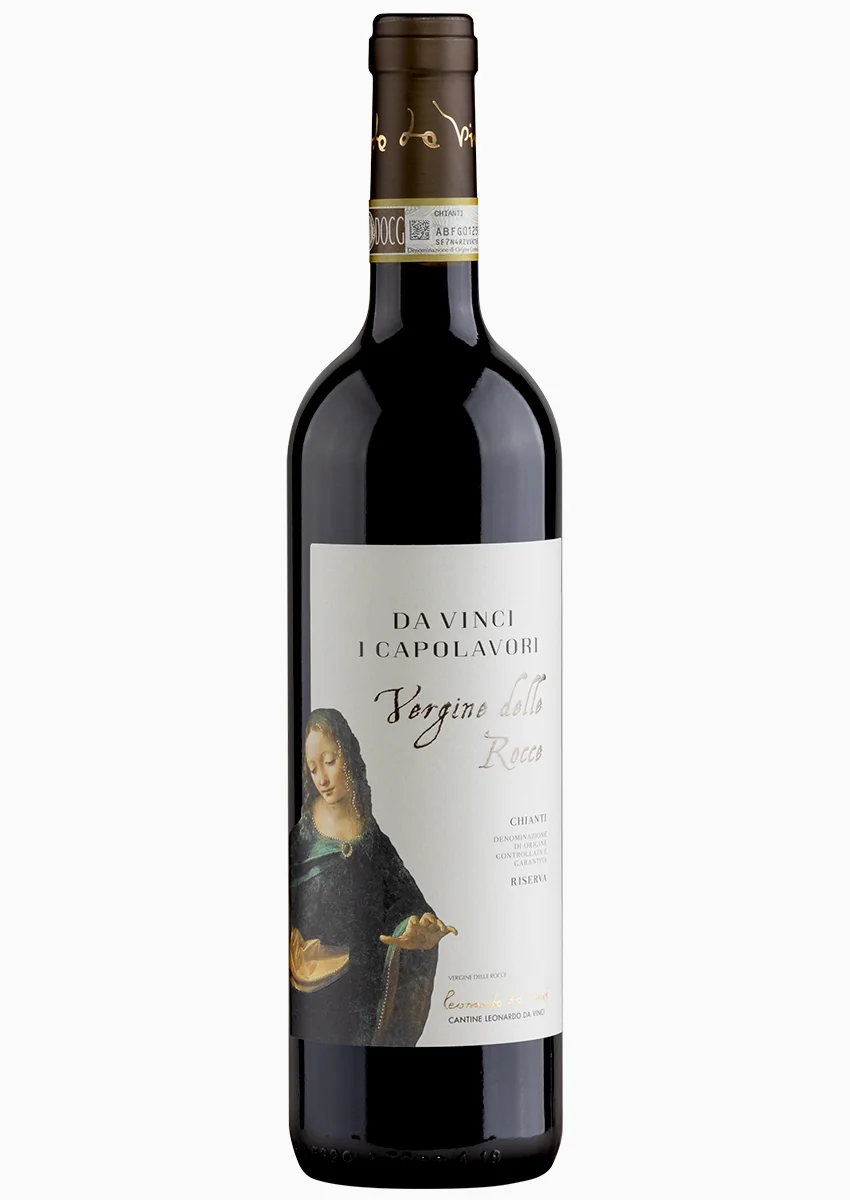
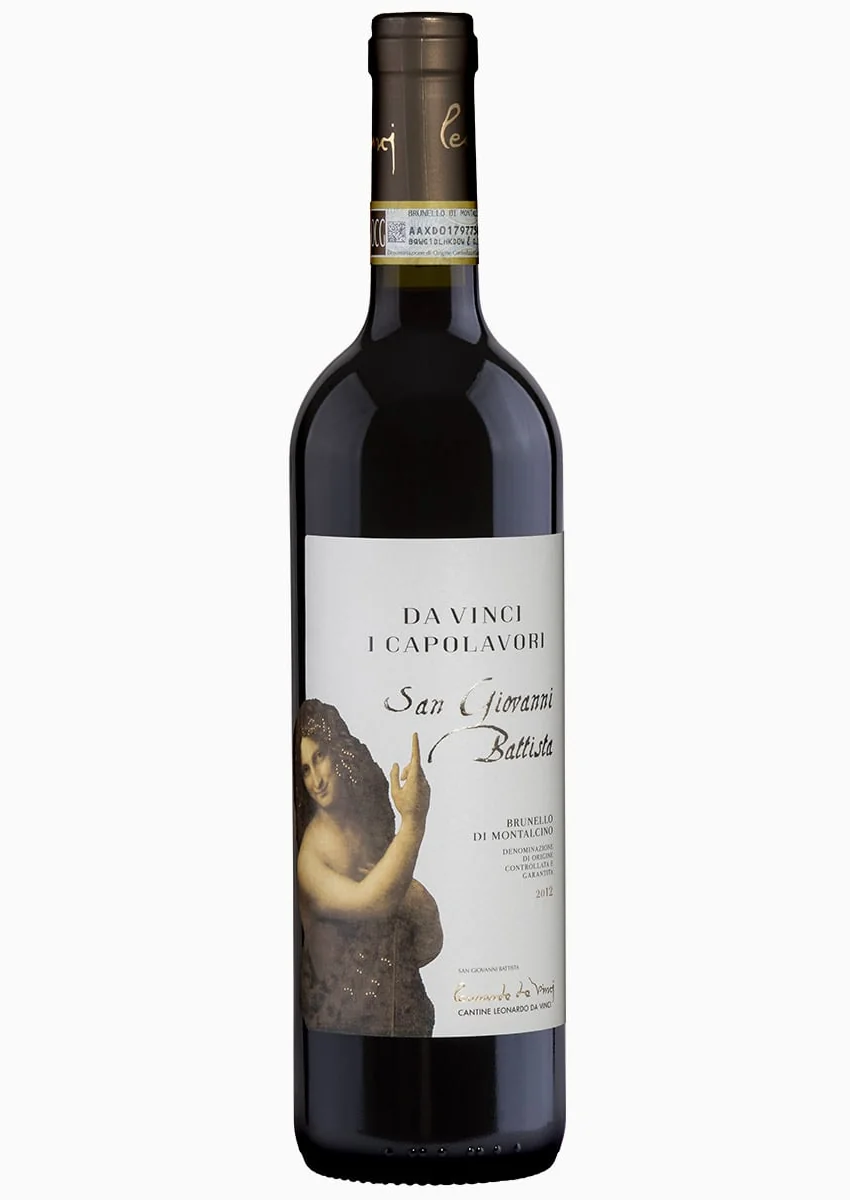
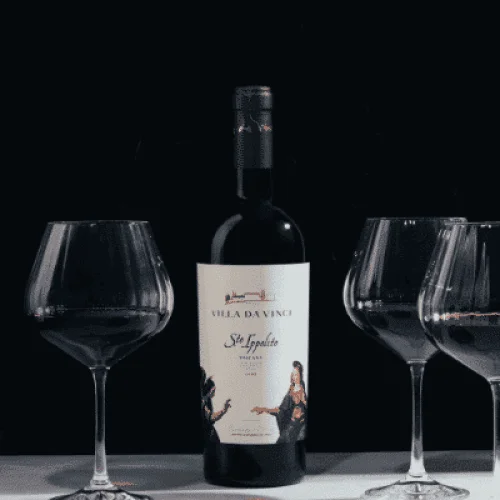
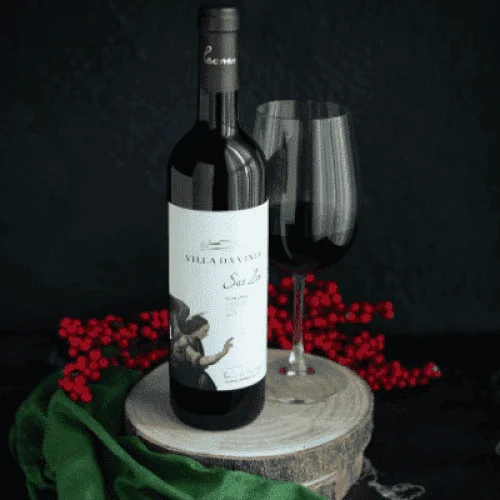
Leonardo da Vinci Cellars has gathered some of the most important full-bodied red wines and fruity red wines of Italian viticulture in the I Capolavori collection which, as the name suggests, celebrates the most beloved and established wines, combining them with paintings by the Genius of Vinci depicted on the label.
One of the most cultivated full-bodied red wines in Italy is Sangiovese, which from Romagna to Campania to Tuscany holds a considerable portion of cultivated land. Many remember the variety for production mainly devoted to Chianti, one of the wines that defines us most on the terrestrial globe. With a historical tradition dating back to 1500, the Sangiovese berry is of medium size and ovoid shape: it has an intense ruby red colour. Like Chianti it is warm, very fruity reflecting the characteristics of the territorial area and extremely tannic. In the I Capolavori collection, the Chianti Riserva is paired with the beauty of the Virgin of the Rocks.
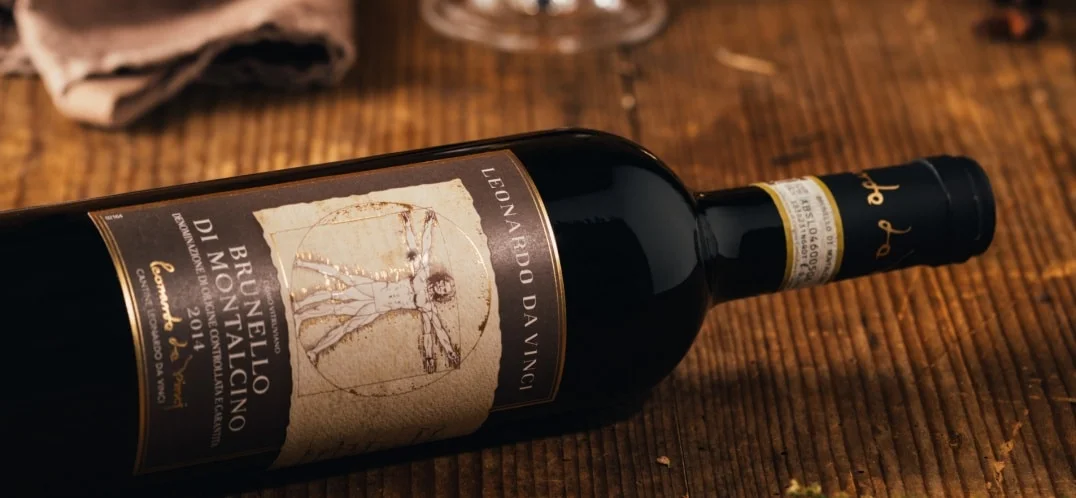
More red wines and more Tuscany on the label dedicated to St John the Baptist: it is the Brunello di Montalcino from the same I Capolavori collection. Brunello, as is known, is one of the most famous and renowned red wines in the world. Fruity notes of blackberries, blackcurrants and cherries. Full and rich body with soft fruity sensations that confirm the olfactory ones, well balanced by good freshness.

Wine guide

Food & Wine

Art & Culture

Wine guide

Food & Wine