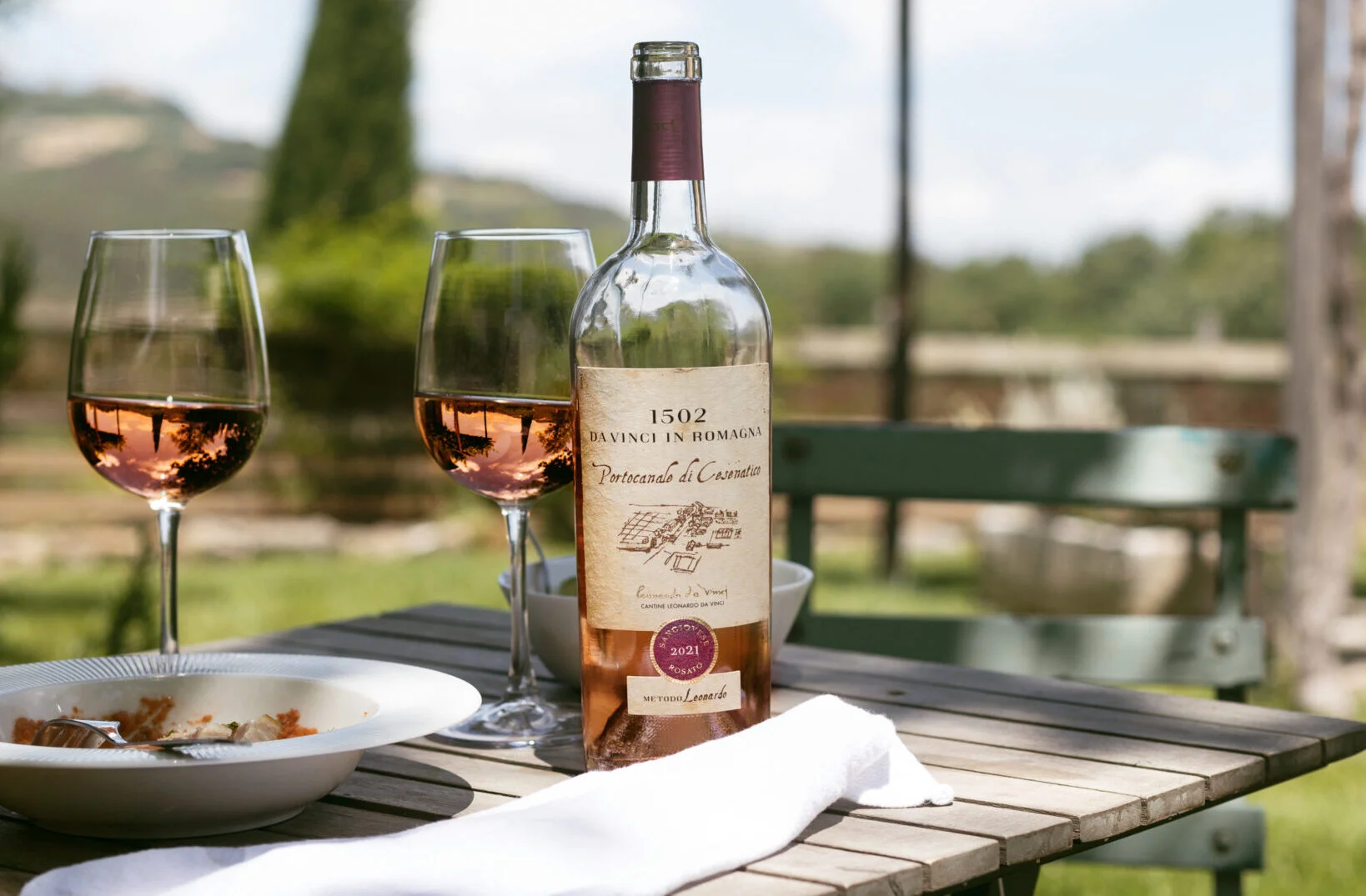
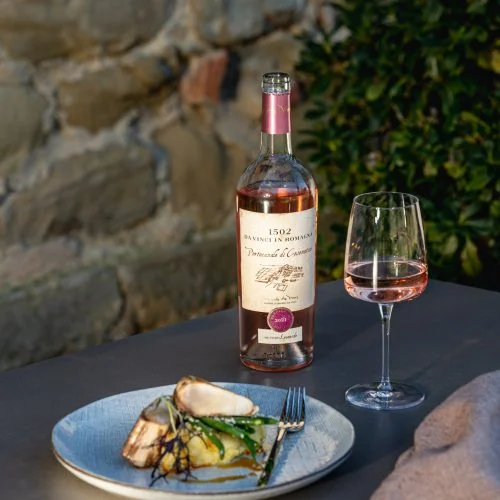
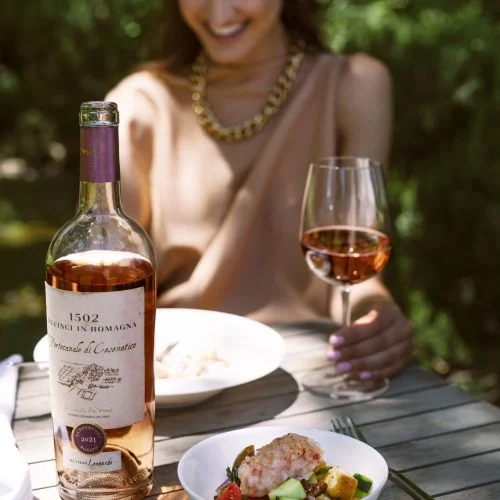
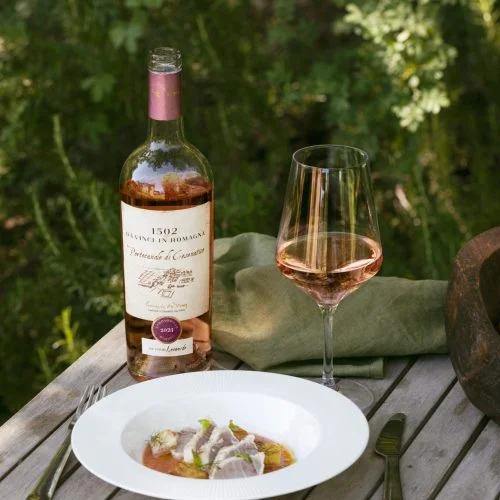
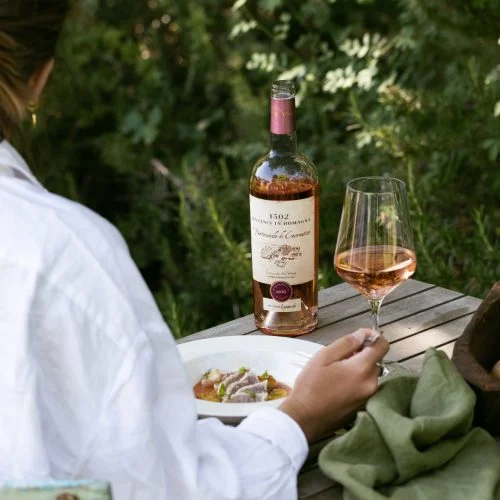
Portocanale di Cesenatico Sangiovese Rosato: fresh and versatile

When discussing rosé wines, we refer to distinctly fresh, perfumed wines that are enjoyable with any meal and pair well with various dishes. Thanks to their incredible versatility, rosé wines pair easily with both fish and meat dishes, particularly shellfish and poultry.

How is a rosé wine made?

First of all, let us dispel an old myth: a rosé wine is not obtained from a mix of white and red wines. The characteristic rosé colour, which can range from pale pink to light red or cerasuolo, as well as the aromaticity, is determined by the maceration on the skins of red-berry grapes, variable depending on the variety and the degree of polyphenols present in the skins. If the maceration is minimal (a few hours), a pale pink wine will be obtained, while for a cerasuolo rosé the time can rise to 10 hours.

What are the ideal pairings for rosé wines?

Rosés have a rather fruity and floral aroma, while on the palate they are fresh and balanced, slightly tannic. Less astringent but more structured than white wines, rosé wines are a versatile and often winning solution when the choice between red and white appears difficult. They lend themselves, in fact, to gastronomic pairings both with fish: fish appetisers and soups, rich but delicate dishes such as seafood risotto, as well as with meat, ranging from cured meats to white meats such as chicken and turkey. Excellent also paired with fresh and lightly aged cheeses, as well as vegetarian dishes.


Portocanale di Cesenatico: our rosé wine

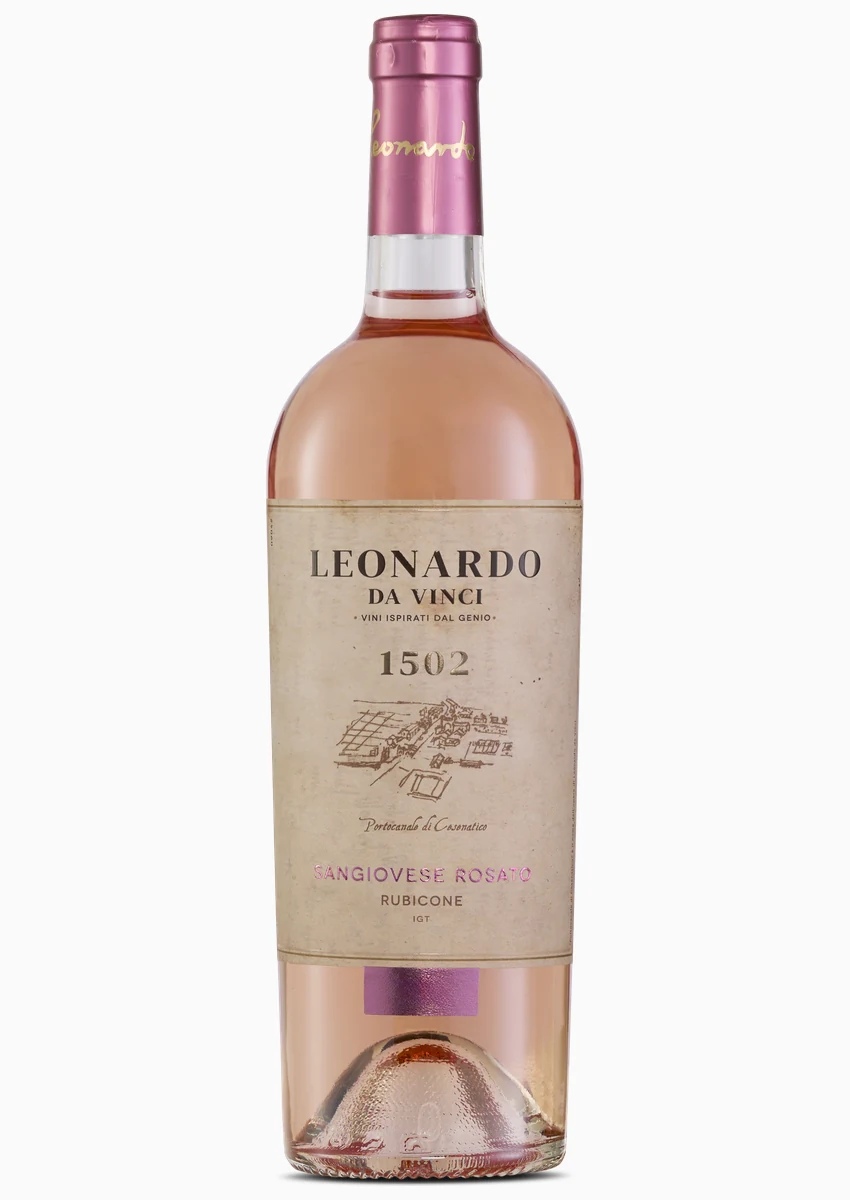
Our Portocanale di Cesenatico is an excellent rosé that lends itself to being enjoyed all year round thanks to its versatility. A beautiful floral note recalls aromas of white peach and apricot. Pleasantly fresh and delicate sip, balanced, crisp and savoury.
It is made from 100% Sangiovese grapes, vinified in steel after a maceration of a few hours, to obtain the correct dissolution of the typical pink colour of this wine. The grapes are cultivated in the hilly area of Predappio, Castrocaro Terme and Bertinoro, in the heart of Romagna, like all the wines in the 1502 da Vinci in Romagna line. This collection pays homage to Romagna and the six months that Leonardo da Vinci spent in the heart of this land. A special tour in four cities that Leonardo captures in the drawings made at the various stages of his journey and reproduced on the labels: Cesena, Cesenatico, Faenza and Imola.

Portocanale di Cesenatico: the story of the label

As the name suggests, the Portocanale di Cesenatico Sangiovese Rosato recalls the port of Cesenatico, dated 1314 and depicted by Leonardo in his sketches during his visit in 1502.
At the request of Cesare Borgia, known as “The Valentino”, head of the Duchy of Romagna, Leonardo was tasked with verifying the various infrastructures present on the territory, suggesting improvements to the pre-existing pier at the sea of the city of Cesena: the Porto Canale di Cesenatico, precisely.
One of the two sketches, the view from above of the maritime village of Cesenatico, is the one that Cantine Leonardo da Vinci selected and transferred to the label for its rosé wine.

Are you 18 years old?

Please verify your age to enter.

No, I am under 18