





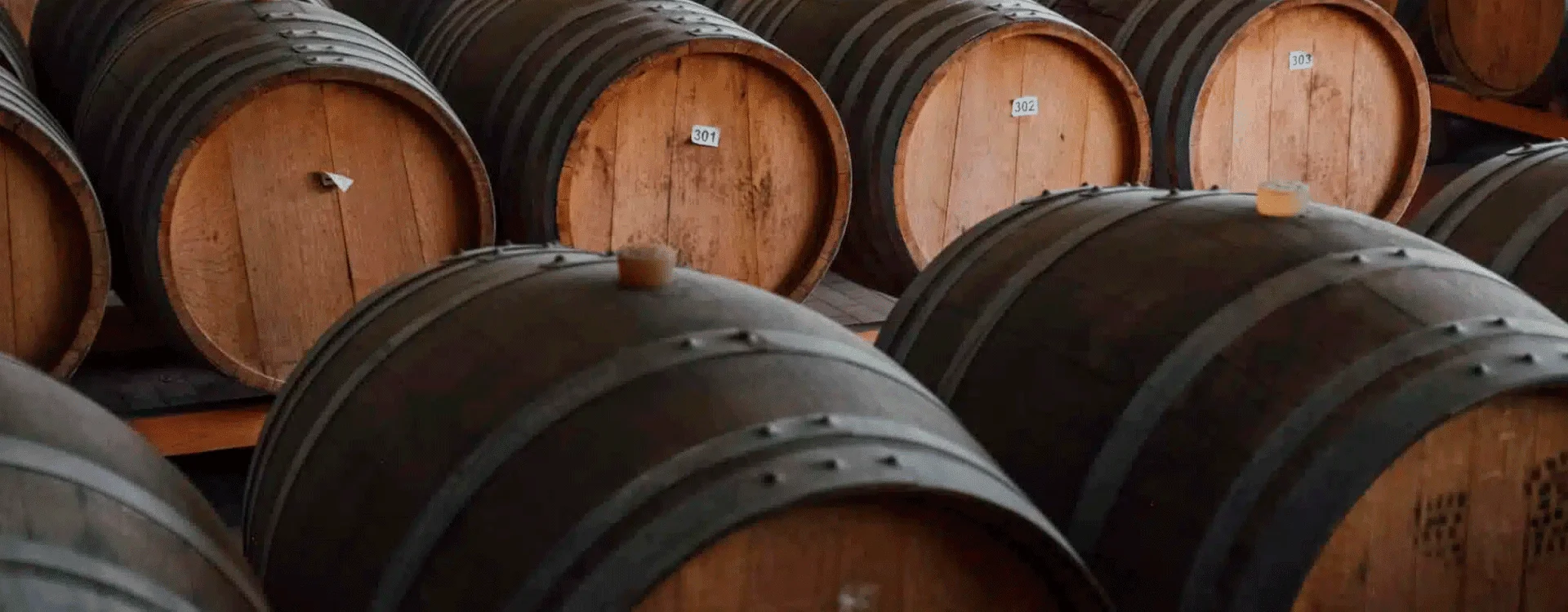
Fermentation, alcoholic fermentation, wine fermentation, must fermentation: a fundamental process that determines the successful outcome of wine. We have no certain data on fermentation processes and techniques.
Fermentation, alcoholic fermentation, wine fermentation, must fermentation: a fundamental process that determines the successful outcome of wine. We have no certain data on fermentation processes and techniques.
It appears that wine fermentation was discovered, probably by chance, by observing the phenomenon of effervescence of certain organisms, cereals or liquids such as, for example, grape must.
Not definable according to any theory of the time, fermentation remained for a long time an obscure process shrouded in mystery. From the time of the Greeks and Romans who relied on the technique simply by placing freshly pressed must inside vats and amphorae, it was necessary to wait for more recent times to provide an explanation both sensible and scientific. First Lavoisier in the eighteenth century, then chemist Lussac in the nineteenth century, who formulated the mathematical ratio that governed the inexplicable transformation, and finally Pasteur. It was the latter who demonstrated in 1854 that fermentation is produced by the activity of yeasts when they develop in the absence of oxygen, as well as demonstrating that the production of undesirable substances in winemaking is linked to the presence of microorganisms of different kinds.
A phenomenon connected to life, as defined by Pasteur, the alcoholic fermentation of wine is a natural process that allows the maturation or transformation of must or grape juice into wine. So after the primary phase of grape harvest and pressing, must is obtained, that is a highly concentrated liquid present in the pulp of the berries and also including the skins. The next phase is therefore entrusted to the fermentation of that must, which will lead to the production of wine in its final form. Primary aromas are hidden in the grape, but it is fermentation that reveals them: as simple as it is true, the process is fundamental.
Fermentation consists of a complex process of transformation of the sugars contained in the must and converted by yeasts into ethyl alcohol and carbon dioxide. Yeasts (called Saccharomyces) are naturally present on the skins and, through aerobic respiration, use the oxygen present in the lees of the must, in order to transform the sugars into carbon dioxide and ethyl alcohol, as well as glycerine, acetic acid and other by-products. Consequently, as soon as the oxygen is depleted, in anaerobic conditions, the fermentation of the must occurs.
The duration of this transformation process is not fixed, but oscillates between 7 and 10 days, and is usually divided into two fermentation phases: the first lasting 24-36 hours, the subsequent one called “tumultuous” of about 7 days and a final, slow phase, of a few weeks, useful for transforming the remaining sugar residues. The entire process must follow a natural course, but not be too fast or too slow, as it would lead to the dispersal of the aromatic substances typical of wine or to the generation of undesirable substances, including excess acidity.
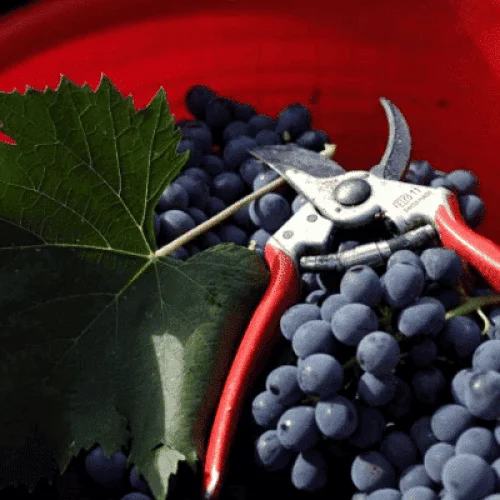
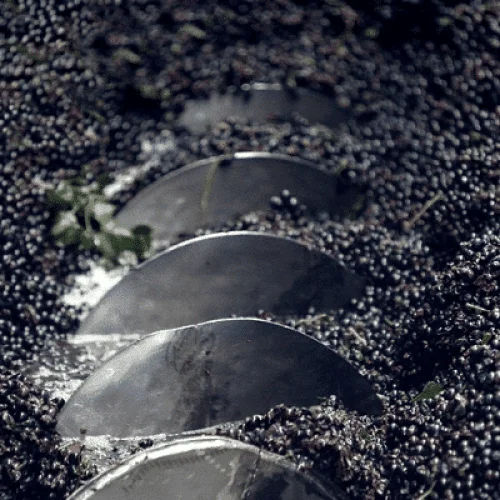
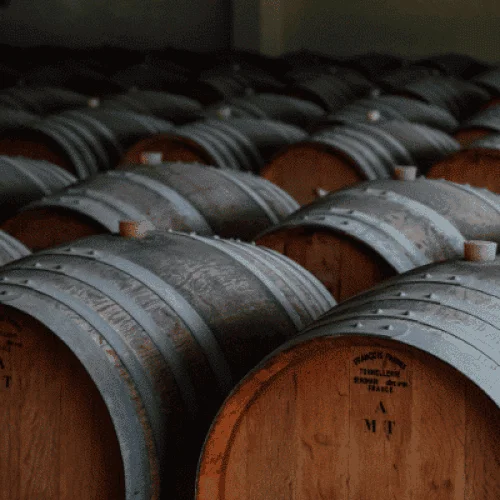
Temperature is of fundamental importance and must remain stable between the two transformation phases and not undergo sudden changes, which would be fatal to the success of a good wine. Depending on the vine variety, whether it is white or red grape, the fermentation procedures are different and follow a completely unique path. For white wine fermentation, a must is used from which the skins have been separated (pressing off) immediately after crushing the berries. The must is subjected to clarification and decantation, then separated from any remaining solid parts. The main purpose of must fermentation for the production of white wines is to allow the aromas typical of the vine variety to continue to expand and define themselves further: a result achieved by scrupulously controlling the temperature between 16 and 20 °C. For this purpose, temperature-controlled vats are used that allow optimal aroma development, a slow transformation of sugars and excellent alcohol yield. Unlike what has been said, for red wine fermentation the must is used inside which the lees are left to macerate, allowing the extraction of colour. If for white wines aroma and body are the primary objective, in this case the extraction of colour and polyphenolic substances become the main focus. Higher temperature is used and greater will be the extraction; a red wine left to ferment at a high temperature will have important structure and a very pronounced body. It is decisive for the extraction of colouring substances from the skins not to fall below 20 °C whilst being fundamental the control of temperatures and avoiding excessive fluctuations. The optimal temperature is constant and between 25 and 30 °C, allowing good extraction of colour and polyphenolic substances, as well as a harmonious balance between these two properties. And finally, after pressing, the solid parts are pressed recovering the remaining excess liquid in contact with the skins and stored in barrels, barriques or vessels for the final phases of refinement and ageing.

Wine guide

Food & Wine

Art & Culture

Wine guide

Food & Wine