





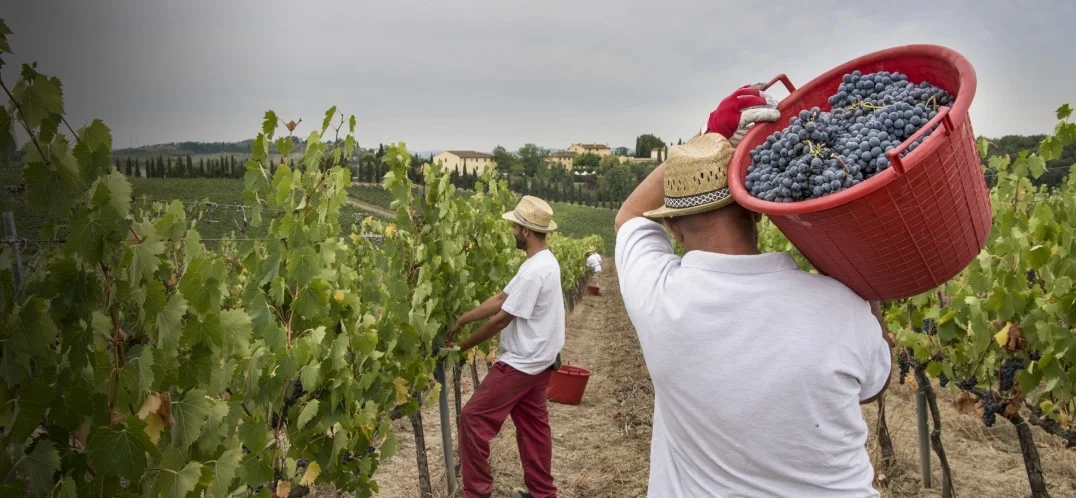
The harvest has begun at Villa da Vinci: in the vineyards that border the Villa, which bear the names of the land plots of Leonardo's family, the clusters of red and white grapes for the Villa da Vinci collection are harvested.
The harvest has begun at Villa da Vinci: in the vineyards that border the Villa, which bear the names of the land plots of Leonardo's family, the clusters of red and white grapes for the Villa da Vinci collection are harvested.
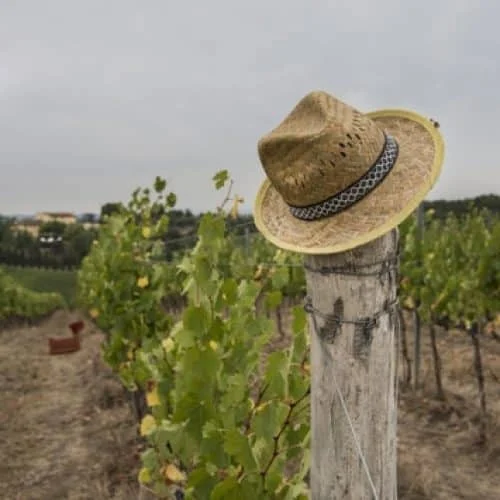
The harvest is one of the most awaited moments for winemakers, and also one of the oldest and most important rituals of the agricultural calendar. The imagery that everyone knows is made up of secateurs, straw hats, baskets to fill and rows bursting with ripe bunches. The harvest is colours, scents and joy, a moment of celebration and sharing. Beyond the folkloric aspect, the harvest is a salient part of winemaking work and its approach – as well as the subsequent phases – contributes to characterising the wine that will end up in the glass.
There is no preset day on the calendar for the start of the harvest, but it generally occurs in three periods: August-September, September-October, October-November. It begins when the grapes reach the right degree of maturity, so it depends on some variables such as climate and temperature. The longer the grape stays on the vine, the greater its sugar content and the lower the acidity. A prolonged maturation period leads to dessert wines and those called “late harvest”.
For example, for Vin Santo from the Villa da Vinci collection, the finest bunches are hand-picked and left to dry until the following February after the harvest, to impart an intense and rich sweetness to the wine.
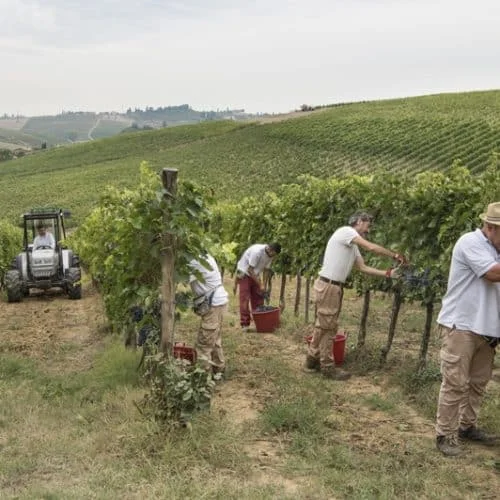
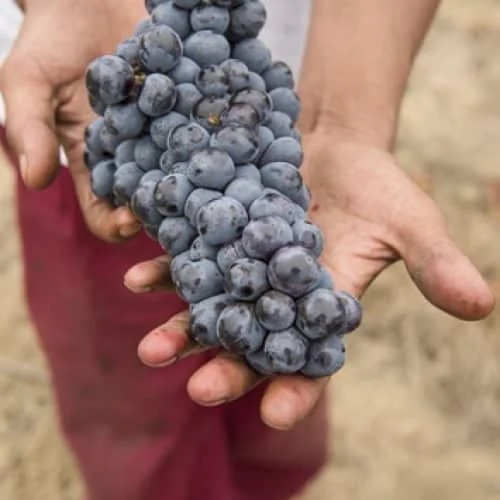
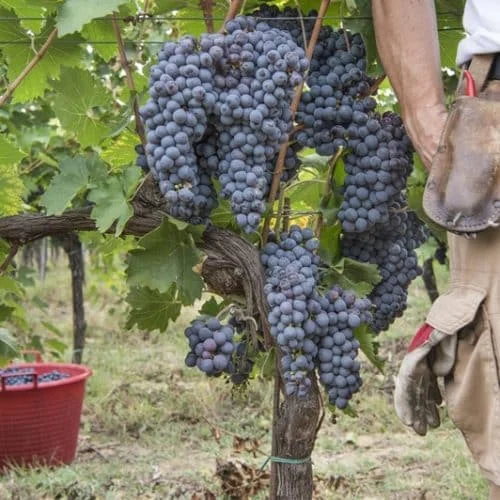
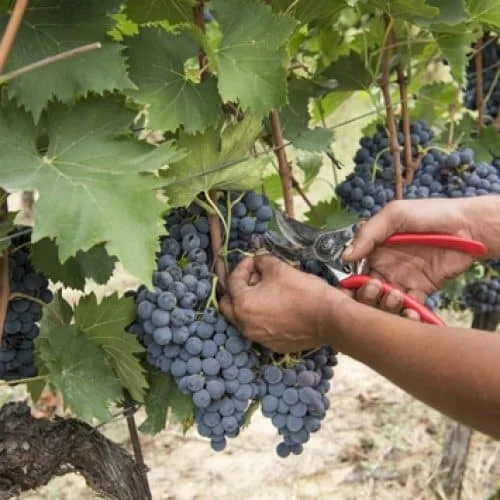
The first phase of the harvest consists of gathering the bunches. If picked by hand, it is called manual harvest, while if picked with the help of machines, the harvest is defined as mechanical.
Hand-harvested grapes offer some quality advantages: the bunch is intact, selective harvests can be made to identify perfectly ripe and healthy fruits. Mechanical harvesting guarantees a saving of time and the ability to harvest all fruits in their ideal state of maturity, but it is not always practicable in vineyards that, for example, have a steep slope, or are in cramped spaces.
The harvested bunches are placed in baskets and crates and subsequently destemmed – that is, the berries are separated from the stem. After destemming, the crushing phase begins. From crushing the grapes, must is obtained, or grape juice, which, after a certain period of contact with the skins, is then left to ferment. Once fermentation is complete, the wine is subjected to racking and filtration, then refermented and aged.
Each phase is made up of choices, agronomic or oenological, and timings – ranging from a few months to many years – that determine the style and character of the wine. Which begins the very day the harvest starts.

Wine guide

Food & Wine

Art & Culture

Wine guide

Food & Wine