Montalcino is a delightful mediaeval village south of Siena, in the beautiful Val d'Orcia. Considered a 'wine cradle', the Montalcino area is famous throughout the world thanks to its most important and delectable product: wine.
Montalcino is a delightful mediaeval village south of Siena, in the beautiful Val d'Orcia. Considered a 'wine cradle', the Montalcino area is famous throughout the world thanks to its most important and delectable product: wine.
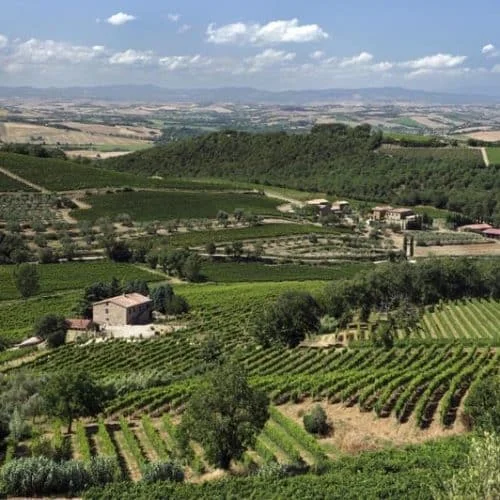
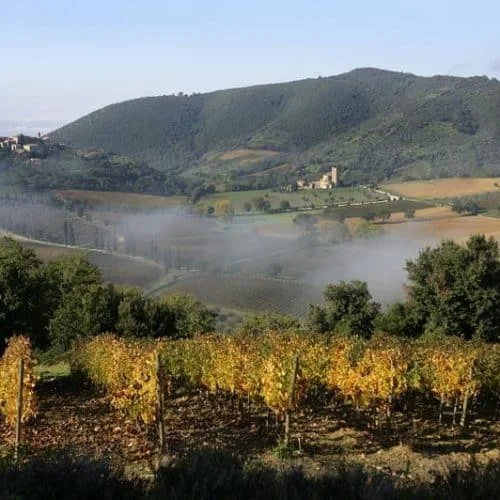
We are in the Siena hills, a well-ventilated and luminous territory, where the climate is mild and summers are long and dry. Due to favourable geological and climatic characteristics, it is particularly suited to vine cultivation.
Producers in this area obtain from the same Sangiovese vineyards two different wines with protected denomination of origin: Brunello di Montalcino and Rosso di Montalcino. The differences between Brunello and Rosso di Montalcino are that the first is intended for long ageing, whilst the second, younger, is appreciated for its particular freshness and vibrancy. For this reason too, Rosso di Montalcino is sometimes referred to as the “young” Brunello. What is certain is that both wines represent celebrated Tuscan excellence loved throughout the world.
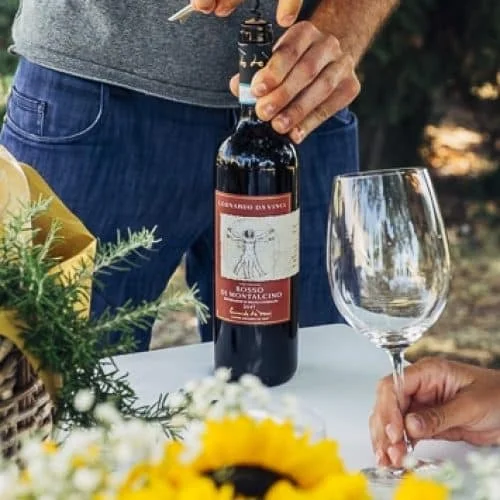
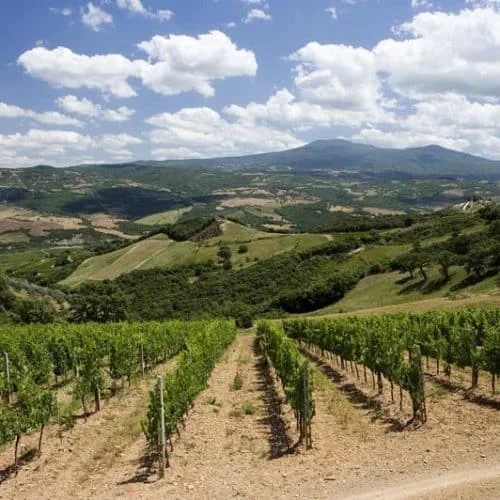
Rosso di Montalcino is a ready-to-drink wine with a clear, harmonious and fragrant colour. It must be bottled in Bordeaux-style bottles.
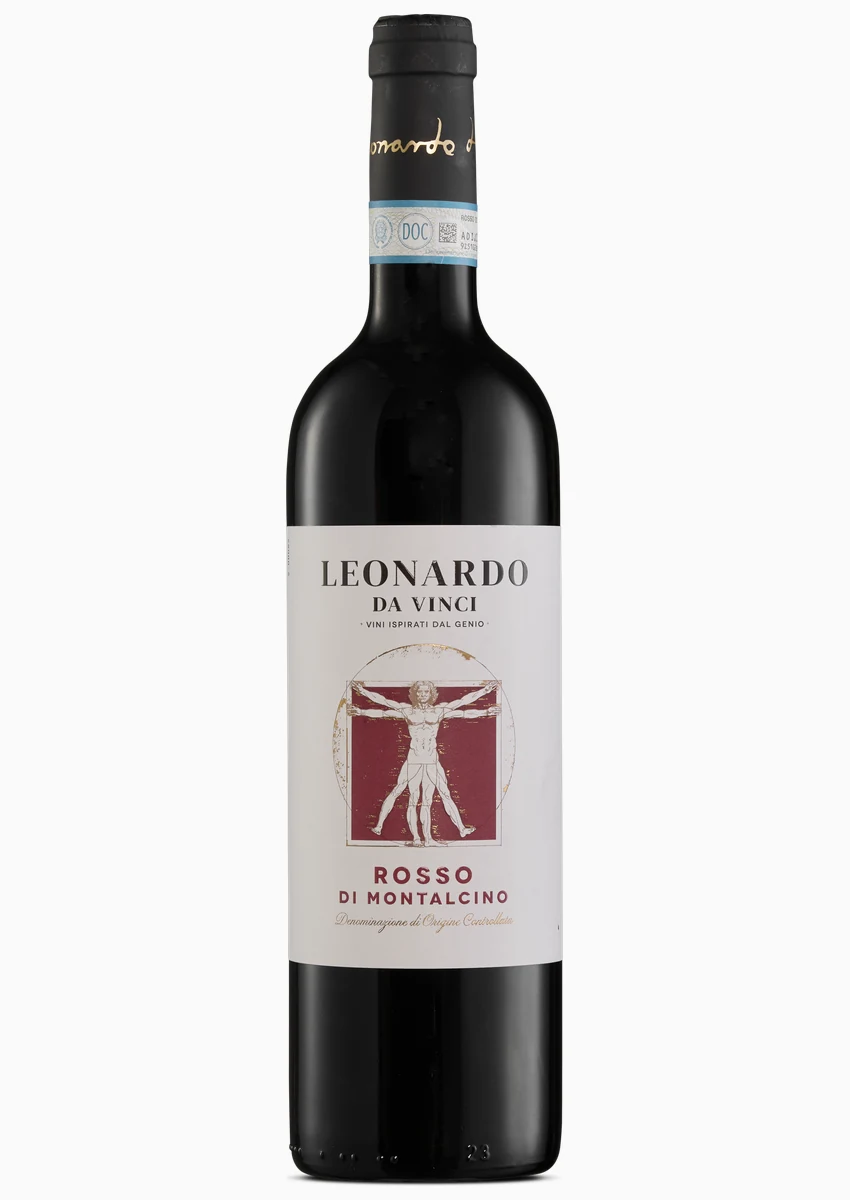
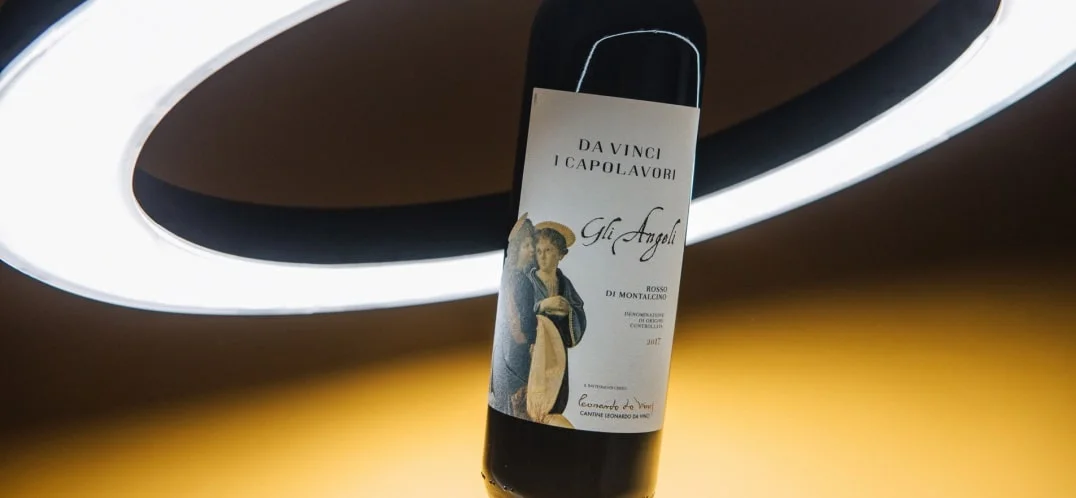
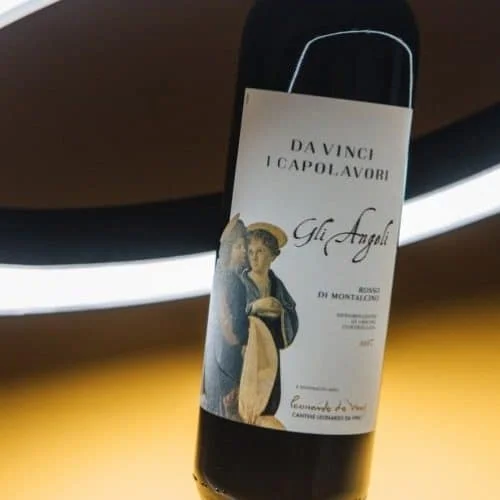
Cantine Leonardo da Vinci has included Rosso di Montalcino in two collections: the ‘Da Vinci I Capolavori’ collection and the ‘Leonardo da Vinci’ collection. Rosso di Montalcino prices typically do not exceed €15 per bottle.
In particular, the Da Vinci I Capolavori collection pairs works of art with wine denominations, and for Rosso di Montalcino, the label bears the painting of the Angels by Leonardo.
Rosso di Montalcino Leonardo da Vinci is made from Sangiovese grapes harvested in the hills of Vinci and Cerreto Guidi. On the nose, it reveals itself very fine and enveloping with a distinct note of cherry and red fruits that give way to a spiced finish. On the palate it is intense with long persistence and good balance between the various components.
For its freshness and harmony, it lends itself to multiple pairings, but the ideal match is with traditional Tuscan cuisine: both the more rustic and rural dishes of peasant tradition, such as pasta and meat-based dishes, roasts of pork or poultry, as well as steaks; but it is also perfect with lighter, plant-based dishes made from garden produce, such as pulses and cereals.

Wine guide

Food & Wine

Art & Culture

Wine guide

Food & Wine