Chianti is a Tuscan red wine with the DOCG designation.
Chianti is a Tuscan red wine with the DOCG designation.
The formula for Chianti wine – that is, the correct blend of grapes, the best method for vinification, and ageing times – was first developed in 1870 by Baron Bettino Ricasoli, who, in addition to being a prominent politician and serving as President of the Council after Cavour, was also an expert and respected oenologist. According to Ricasoli’s recipe, the grape varieties to be used to obtain Chianti wine were: Sangiovese, Canaiolo, and Tuscan Trebbiano. Today, the production of Chianti wine is regulated by a production regulation that, among other things, also establishes the area of origin of the grapes for Chianti Docg, which extends to all central Tuscany, in the territory of the provinces of Florence, Pisa, Pistoia, Prato, Siena, and Arezzo.
In addition to being one of the most beloved wines of Tuscany, Chianti is a wine well known and appreciated throughout the world, and there are many curiosities and anecdotes that accompany its history: one of these concerns the scientist Enrico Fermi, an exile in the United States, who in 1942, when he invented his atomic pile, toasted with his team with a bottle of Chianti – still preserved today in the FermiLab museum in Batavia, near Chicago.
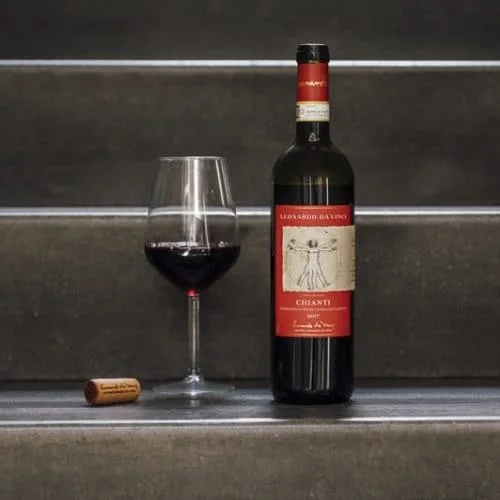
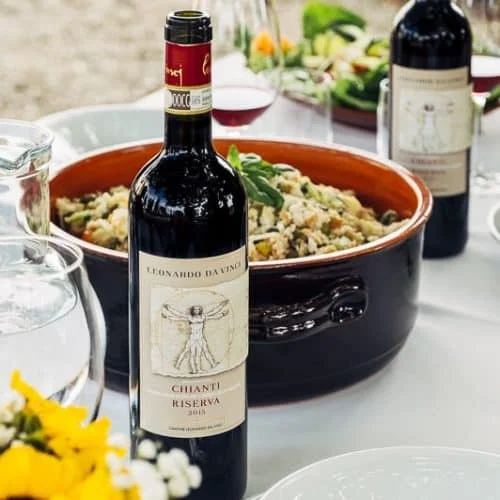
With the exception of some specifics related to precise cultivation sub-zones and grape provenance, in general, to obtain the Riserva designation, Chianti Docg must age for at least 2 years and have an alcohol content of at least 12% vol. Given the many variations of this extraordinary wine, Chianti has a highly variable price and depends on various factors, including the area of grape origin or ageing time.
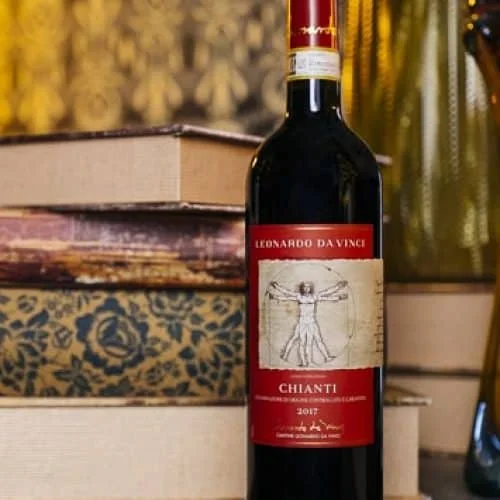
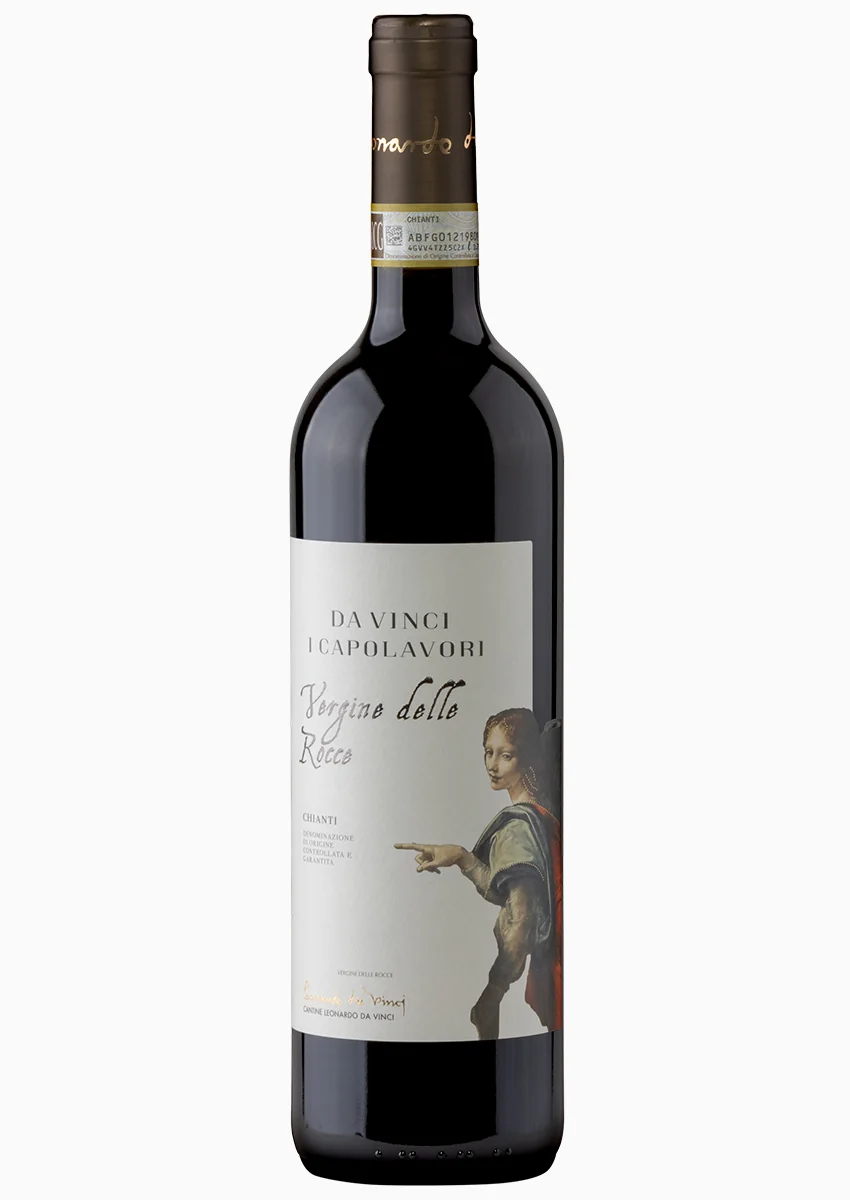
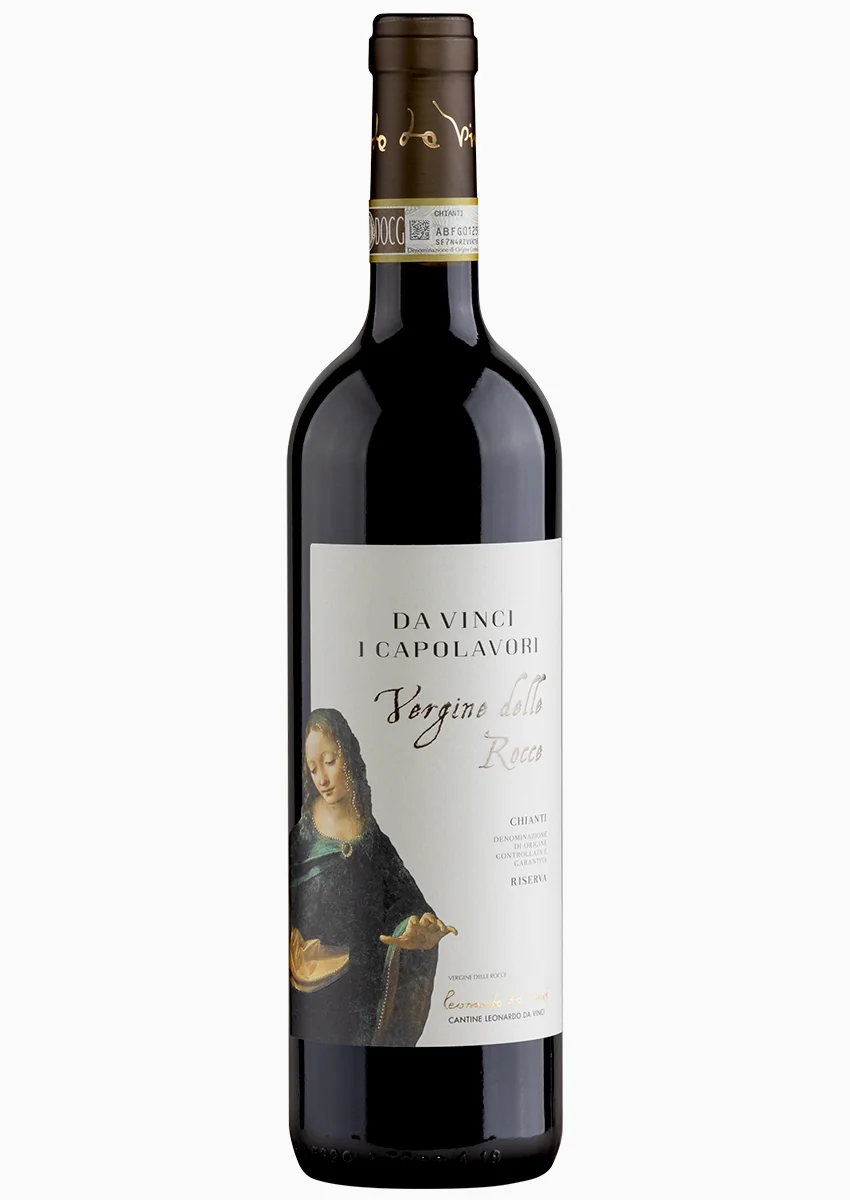
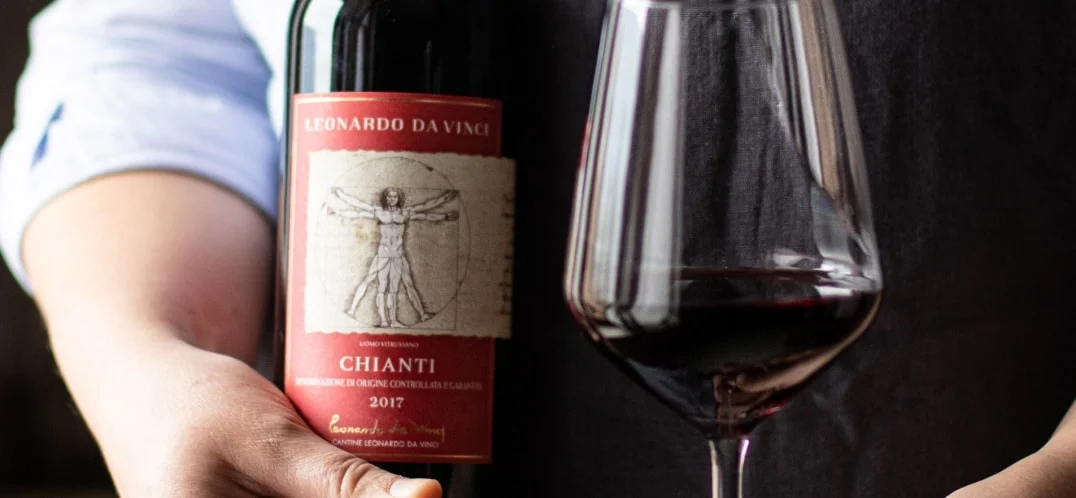
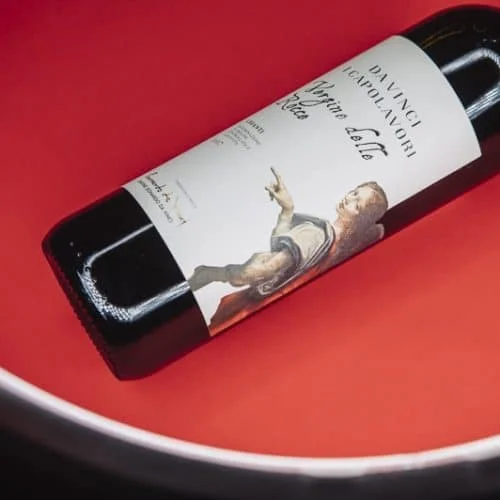
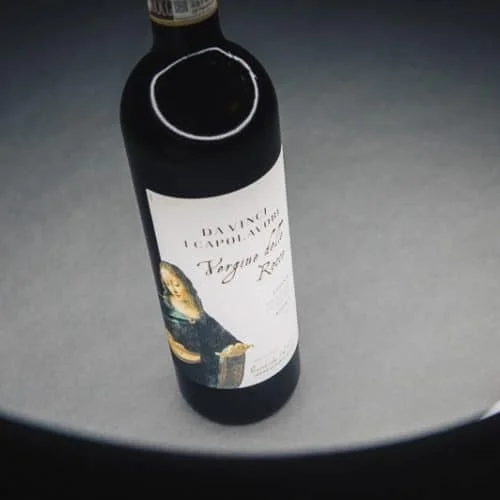
Cantine Leonardo da Vinci, in its vineyards in Tuscany, produces Chianti Docg and Chianti Docg Riserva. In the Da Vinci I Capolavori collection, inspired by Leonardo’s most famous works paired with the most celebrated and beloved wines of the Italian territory, Chianti is matched with the Virgin of the Rocks, with the painting reproduced on the label. The Tuscan landscape in Leonardo’s painting perfectly suits this typically Tuscan wine. On the palate, Chianti Docg Vergine delle Rocce is fragrant and full-bodied, with a balanced and intense aroma and excellent persistence with a fruity aftertaste. Chianti Riserva Docg, on the other hand, has a purple-red colour with intense chromatic tones; on the nose it has fruity and spicy notes of cherry, vanilla, and cinnamon. Chianti Docg and Chianti Docg Riserva are also present in the Leonardo da Vinci collection, which includes Italian wines suitable for everyday dining. Chianti Docg Leonardo da Vinci has a pleasant, intense, long flavour, decidedly fine. The Riserva version has fruity and spicy notes of cherry, vanilla, and cinnamon.
The difference between Chianti and Chianti Classico is a geographical and historical matter. Understanding the two identities allows for better guidance in your choice. Chianti and Chianti Classico are two different Docg with two distinct regulations and two different Protection Consortiums. The term Chianti Classico refers to a wine with a precise DOCG, produced in the original Chianti zone, within a production territory that includes the municipalities of: Castellina in Chianti, Gaiole in Chianti, Greve in Chianti, and Radda in Chianti in their entirety, and in part those of Barberino Val d’Elsa, Castelnuovo Berardenga, Poggibonsi, San Casciano Val di Pesa, and Tavarnelle Val di Pesa. It was in 1716 that the Grand Duke of Tuscany Cosimo III established the boundaries of the Chianti production zone, where the wine of the same name was produced and already very successful at that time. At the beginning of the 20th century, that production territory was no longer sufficient to meet the enormous demand, so production began outside the territory delimited by the Grand Duke. It was therefore necessary to re-establish and protect the boundaries of the original production, and in 1932 the suffix “Classico” was added to wines produced in the original zone. Today, in the geographical area of Chianti, Chianti Classico is produced. Whereas Chianti wine is produced outside the original geographical area of Chianti.
According to Giorgio Vasari’s identifications, in one of his most famous paintings, the Mona Lisa, Leonardo da Vinci portrayed a young Florentine noblewoman, Monna Lisa Gherardini. Her husband, Francesco del Giocondo, commissioned the portrait from Leonardo in the early years of the 16th century. The Gherardini family owned Villa Vignamaggio, one of the historic estates of Chianti Classico. For this reason, one might think that the background of the world’s most famous painting depicts the view of the hills overlooking the villa, that of Chianti Classico.
Chianti Docg is a wine with a vivid ruby-red colour, fruity perfume, and harmonious, dry flavour, which refines over time, acquiring greater richness and complexity. At the table, it is served with cured meats and aged cheeses, first and second courses based on red meat, dishes from the peasant tradition of Tuscany such as ribollita, or bean and black cabbage soup, and of course the Florentine steak.

Wine guide

Food & Wine

Art & Culture

Wine guide

Food & Wine