In addition to being amongst the most loved and known wines in the world, Pinot Grigio is, by export volumes, the leading Italian still white wine.
In addition to being amongst the most loved and known wines in the world, Pinot Grigio is, by export volumes, the leading Italian still white wine.
Of the 67,000 hectares globally planted with Pinot Grigio, 31,360 are in Italy, especially in the area called “the Venices”, which gave rise to the creation of a specific protected denomination of origin – Pinot Grigio of the Venices DOC – and the corresponding production regulations.
The Venices are a story of geography and politics, a mirror of Italy and the evolution of boundaries and cultures. The demonstration that administrative boundaries often overlap with pre-existing and immutable cultural ones is frequently found in agronomic products. For example, wine, which transcends regional barriers and becomes a typical cultivation of more extensive geographical areas.
The Venices are historically three: the Euganean, the Tridentine and the Giulian. Territory also called the Triveneto. The cornerstone of the viticultural history of the Venices is represented by the Republic of Venice, whose commercial and agronomic activities extended from the lands of Istria to the Vallagarina valley. Pinot Grigio of the Venices DOC belongs, therefore, to the macro-area “Of the Venices”, a territory that has homogeneous characteristics of microclimate and soil geology, extending over 3 regions: Veneto, Friuli-Venezia Giulia and the autonomous province of Trento.
Pinot Grigio of the Venices DOC has production regulations that govern its production in order to focus on quality and define reference values for each production phase. The Pinot Grigio of the Venices DOC protection consortium is committed to protecting this wine, which has 85% of its production in the territory of north-eastern Italy and represents 43% of global production. Cantine Leonardo da Vinci’s Pinot Grigio of the Venices DOC is produced in the flat and hilly areas of the three Venices. The grapes are harvested manually and mechanically at the end of August; vinification takes place with light pressing and fermentation at controlled temperature to develop fruity and floral aromas whilst maintaining the classic fresh note on the palate, which evokes pear and melon flesh. The aromas are enhanced by freshness and minerality on the palate. Overall, a rich and soft structure emerges.



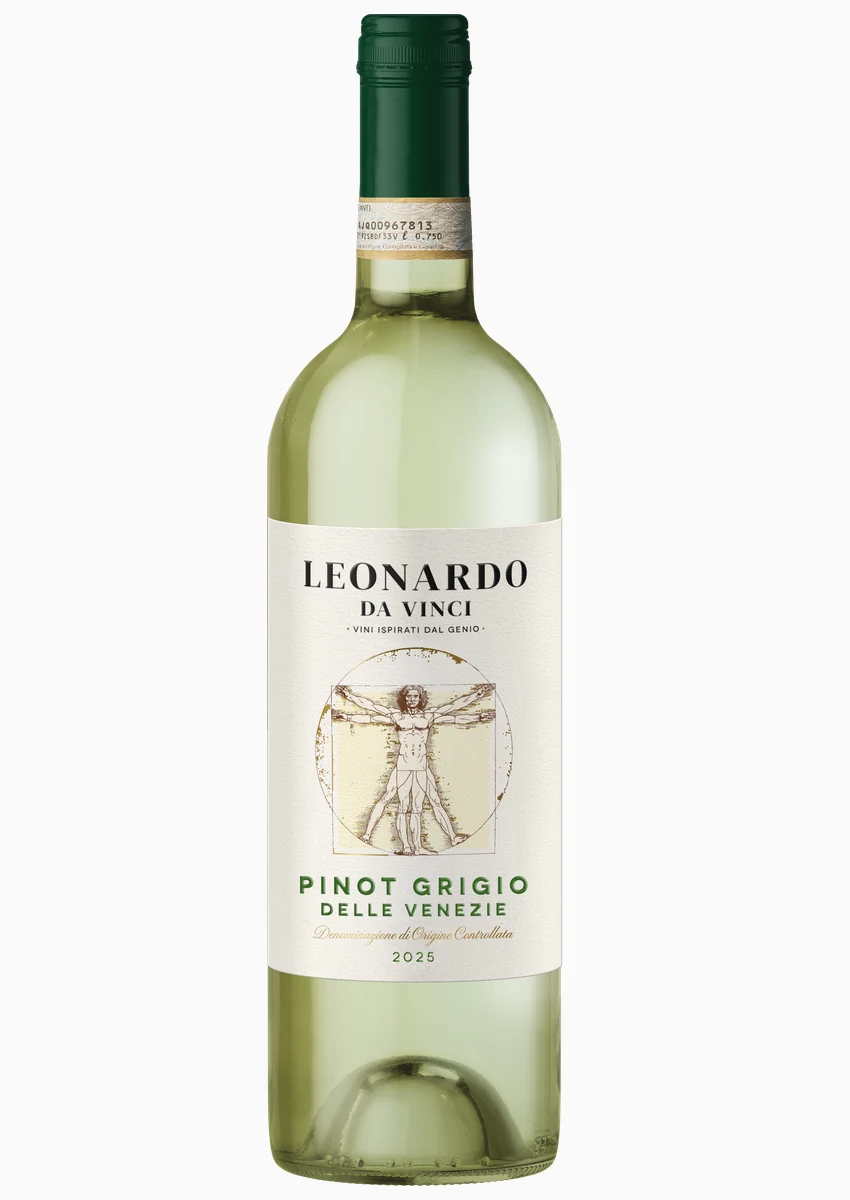
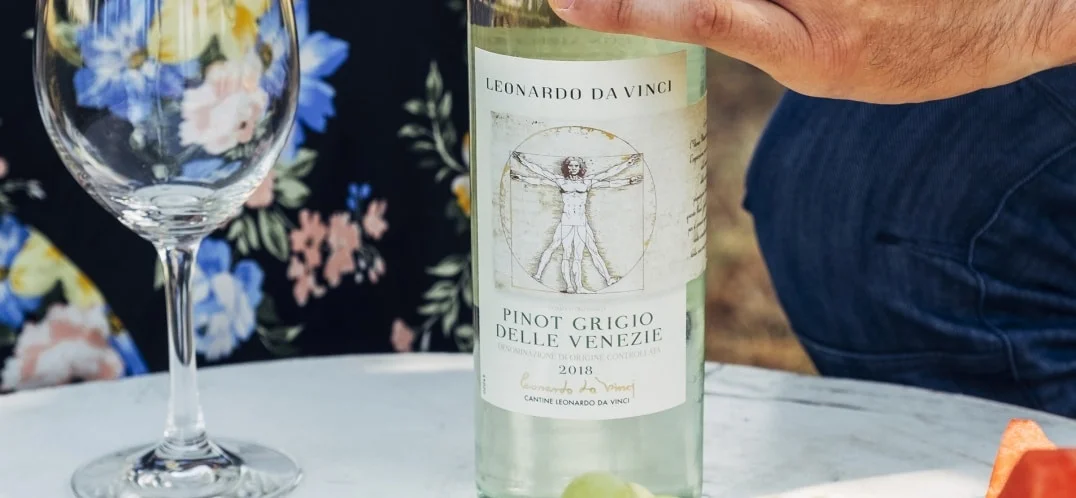
Pinot Grigio is a perfumed wine, fruity and with great structure. It is fresh and intense and full of harmony. Pinot Grigio derives from a gemmatic mutation of Pinot Noir. The colour of the grapes is grey tinged with pink and gives rise to wines of pale yellow and copper colour. Pinot Grigio of the Venices DOC by Cantine Leonardo da Vinci belongs to the Leonardo da Vinci collection which is characterised by labels bearing the most famous drawing of the Tuscan genius, the Vitruvian Man, a symbol of the union between science and art. The original drawing of Leonardo’s Vitruvian Man, made in pen and ink on paper, is preserved in Venice, in the Cabinet of Drawings and Prints of the Galleries of the Academy.
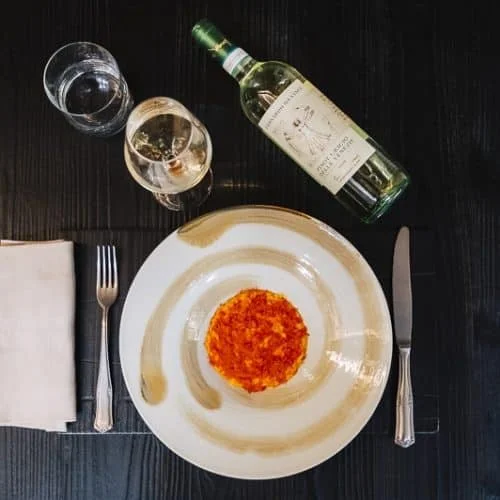
Belonging to a geographical area that borders the Adriatic Sea and the Dolomites, Lake Garda and the hills of the Carso, Pinot Grigio of the Venices DOC pairs with innumerable local products and traditional cuisine, if one considers the pairing between foods and wines typical of the same territory. Excellent as an aperitif, Pinot Grigio can accompany cheeses and cold cuts, as well as seafood. But also risottos, mantecato baccalà, mushroom-based dishes, eggs and white meats. Certainly part of its global success lies also in its extreme versatility which allows it to accompany the entire meal and dialogue with international cuisines.

Wine guide

Food & Wine

Art & Culture

Wine guide

Food & Wine