Pinot Grigio: history, characteristics and food pairings

Pinot Grigio: storia, caratteristiche e abbinamenti

Pinot Grigio is considered one of the great international white wines and is also one of the most widespread grape varieties amongst the regions of north-east Italy (Friuli, Veneto and Trentino Alto Adige).
The shape of the Pinot Grigio cluster resembles a pine cone, because the berries are small and very close together and indeed the name 'Pinot'

derives from the French “pin”, meaning pine. In all likelihood, Pinot Grigio derives from a mutation of Pinot Noir – which is one of the most widespread and well-known red-berried grape varieties in the world. Pinot Noir, born in France and then becoming an international wine variety, has indeed transformed over the centuries into other varieties: Pinot Bianco, Pinot Meunier and Pinot Grigio.

Pinot Grigio: the history of the wine

It appears that a mention of Pinot Grigio was found in some ancient historical documents dating back to 1375, where it is shown that it was commercialised from France to Hungary and Germany, where it was called “Rulander“. It arrived in Italy some centuries later, at the end of the nineteenth century, along with other French varieties and began to be planted in the northern regions.
Pinot Grigio is cultivated in areas with cold and consistent climates: it suffers from temperature fluctuations and heat. Consequently, the regions that host it are Friuli Venezia Giulia, Trentino Alto Adige, Veneto and Lombardy.
Of the 67,000 hectares worldwide under Pinot Grigio cultivation, 31,360 hectares are found in Italy, especially in the area called “Venezie”, which gave rise to the creation of a specific protected designation of origin – Pinot Grigio delle Venezie DOC – and its corresponding production specification.


Pinot Grigio: characteristics of the wine

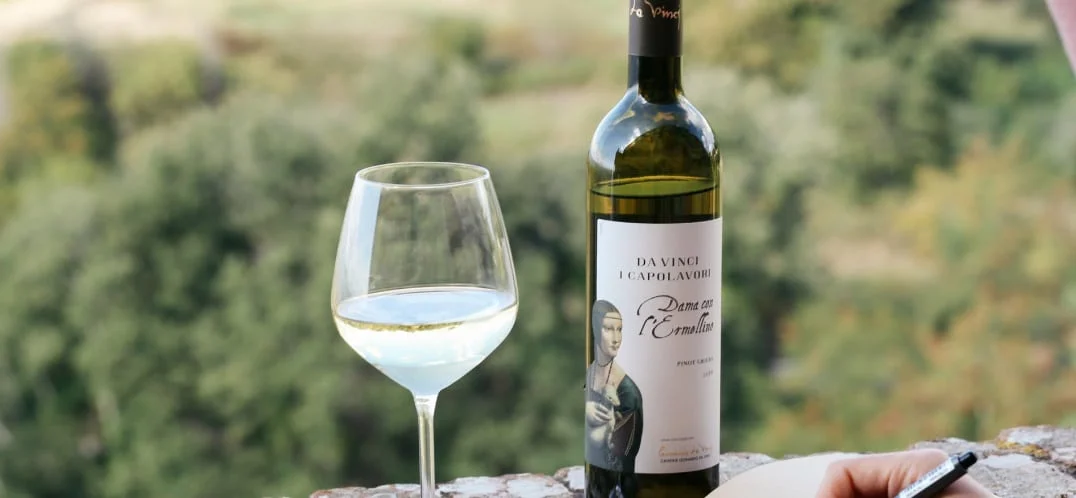
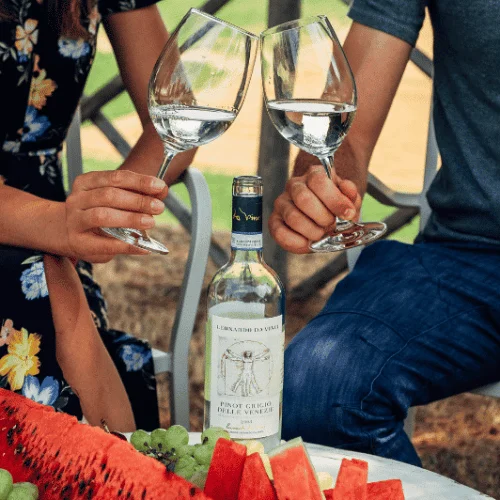
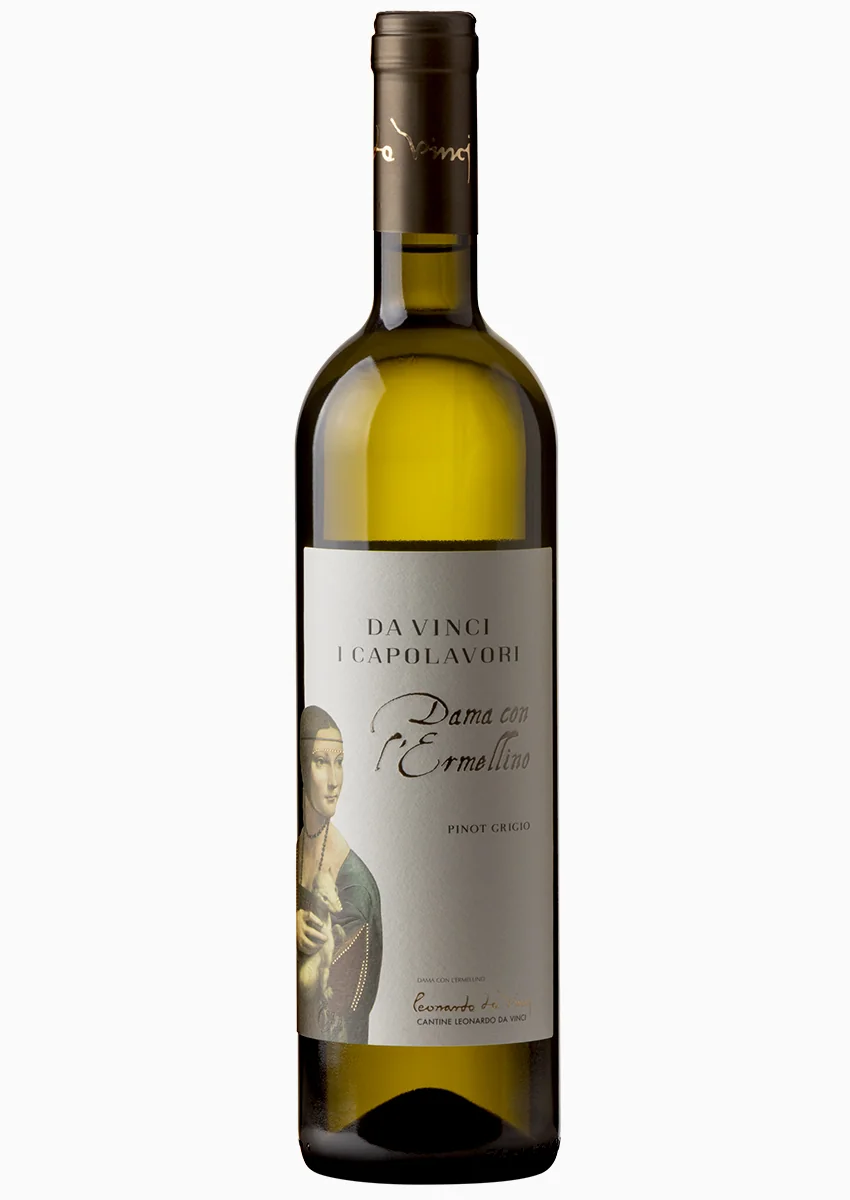
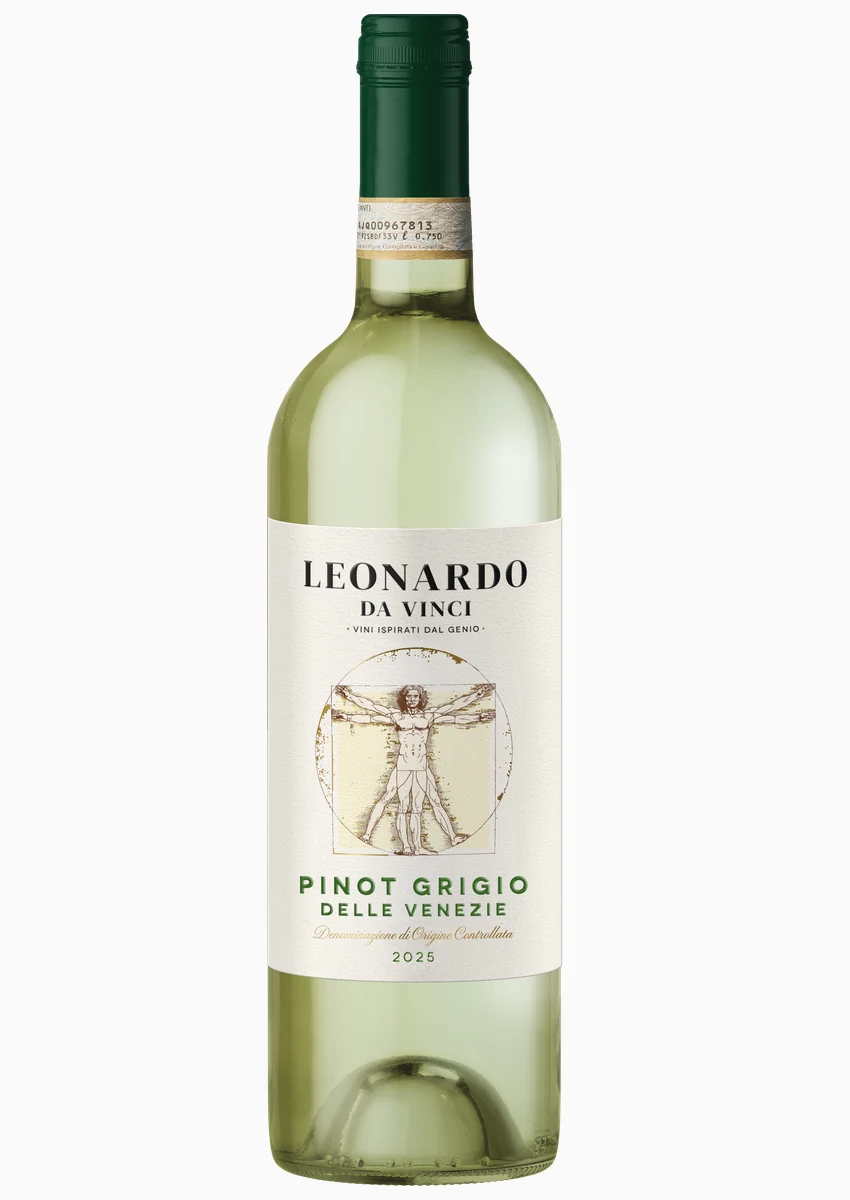
The flavour of Pinot Grigio differs depending on the production area and the winemaking method. For example, in particularly cold areas the wine will have body and structure, whilst where there are temperature variations the flavour will be more fruity. If vinified in contact with the skins, the colour will be coppery, otherwise the appearance will be clearer and brighter in tone. The variety in which it appears on the market also affects the price variation at which Pinot Grigio is purchased. In the collections of Cantine Leonardo da Vinci, there are two Pinot Grigio wines: Dama con l’Ermellino Pinot Grigio Rubicone IGT from the 1502 Da Vinci in Romagna line and Pinot Grigio Delle Venezie DOC from the Vitruviano line. The first reveals to the nose aromas of broom flowers, jasmine and a fresh herbal undertone, maintaining the typical fresh note on the palate; the second, more subtly fruity, evokes notes of apple and pear and provides a perfectly balanced sip.

Pinot Grigio: wine and food pairings

The versatility of Pinot Grigio also translates into diverse possibilities for pairing with food, so much so that it is considered an “all-course” wine. Pinot Grigio is opened from the aperitif onwards or to accompany appetisers based on cured meats or seafood, is ideal for flavourful fish dishes, first courses seasoned with vegetable or mushroom sauces, cheeses and white meats or eggs. The more complex and full-bodied versions pair well with risottos or spiced dishes.

Pinot Grigio and curiosities

Pinot Grigio is particularly loved in the USA and during the lockdown became the “domestic wine” of American families who consumed their meals at home. An increase in consumption during the pandemic demonstrates this, ranging from +15% to +30% in the American market.

Are you 18 years old?

Please verify your age to enter.

No, I am under 18