





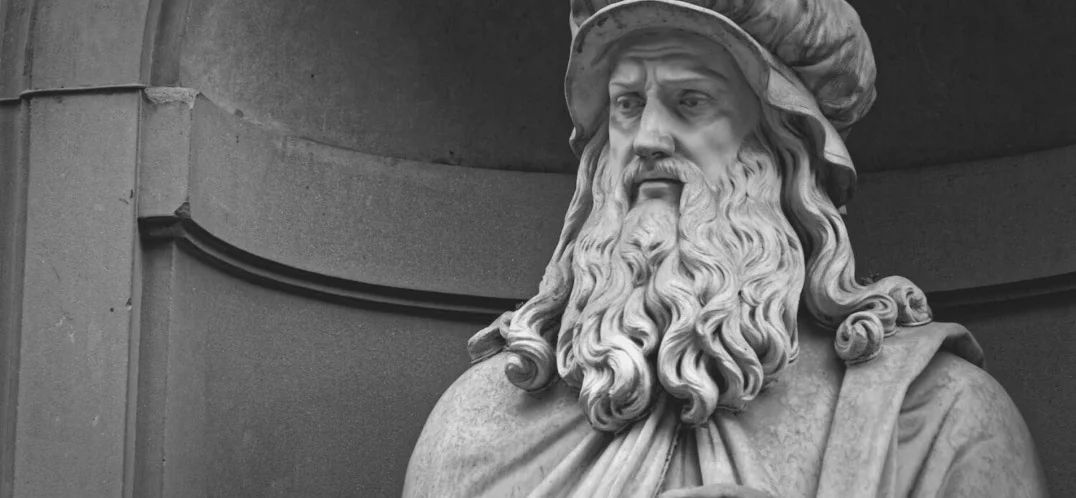
"Wine, the divine liquor of the grape": it is with these words that Leonardo da Vinci referred to wine and the grape over five centuries ago.
Leonardo da Vinci is undoubtedly one of the world's greatest geniuses.
"Wine, the divine liquor of the grape": it is with these words that Leonardo da Vinci referred to wine and the grape over five centuries ago.
Leonardo da Vinci is undoubtedly one of the world's greatest geniuses.
His fame as a scientist, artist, sculptor and inventor is well known, but perhaps not everyone knows that Leonardo was also a passionate and expert connoisseur of wine.
His knowledge and experience in wine are traceable to the period of his early childhood in the Tuscan countryside around the town of Vinci. His father, Piero, owned a plot of land partly planted with vines, and it was here, immersed in nature, that Leonardo conducted his experiments in agronomy and viticulture, with a spirit of observation and inquiry into all the natural processes that lead to grape maturation. His passion was such that his studies in agronomic and oenological matters also led to the invention of tools and techniques for transforming grapes.
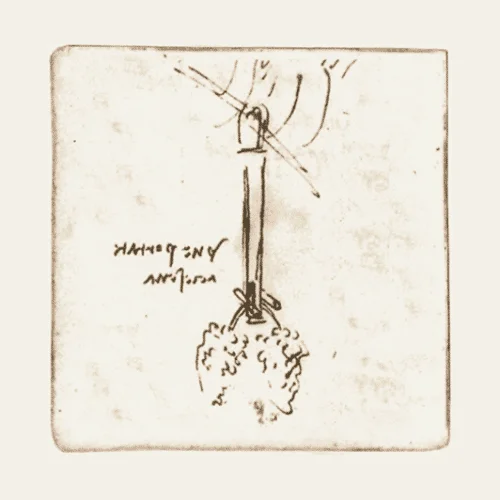
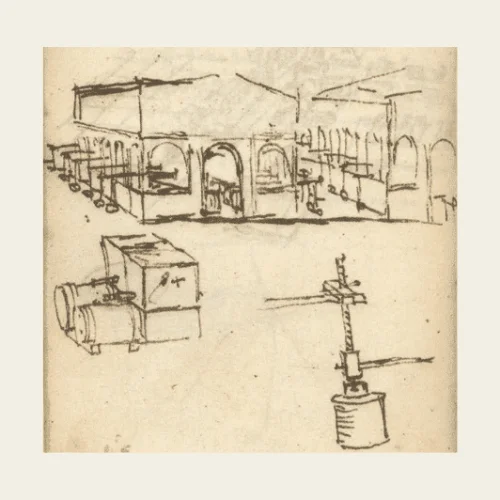
His love for the vine and for wine always accompanies Leonardo da Vinci throughout his celebrated artistic career.
As a supporter of “moderate consumption”, expense accounts have been found in which he recorded regular wine purchases.
When Leonardo painted the famous “Last Supper” in Milan in 1499, the payment he received was a vineyard, about 300 metres from the refectory of Santa Maria delle Grazie, given by Ludovico il Moro as a gesture of recognition for “the various and marvellous works executed by him“.
Further research and studies on wine can also be found in the notebooks from his 1502 journey to Romagna, when Leonardo stayed at the court of Cesare Borgia, known as “The Valentino”. Here the Genius drew bunches of grapes in withering and noted a project for the first barrel to be used in winemaking.
In 1515, Leonardo da Vinci writes a letter to the steward of the Fiesole estate in which he complains about the wine he received in Milan. From a simple tasting, he identifies in the poor quality of the grapes harvested and in the incorrect winemaking methods the reasons for the wine’s poor result.
“If you and others would exercise sense in such matters, we would drink excellent wine“: and with these words Leonardo presents himself as a sensoralist, a true forerunner agronomist, as well as oenologist and competent wine taster, providing a list of good practices and winemaking techniques aimed at obtaining a wine free from defects.
It is from this passion of Leonardo for wine that the Leonardo da Vinci wines are born, wines of which the Genius today would be proud.

Wine guide

Food & Wine

Art & Culture

Wine guide

Food & Wine