The Annunciation is one of Leonardo da Vinci's most famous works, alongside the Mona Lisa, Lady with an Ermine and The Last Supper.
The Annunciation is one of Leonardo da Vinci's most famous works, alongside the Mona Lisa, Lady with an Ermine and The Last Supper.
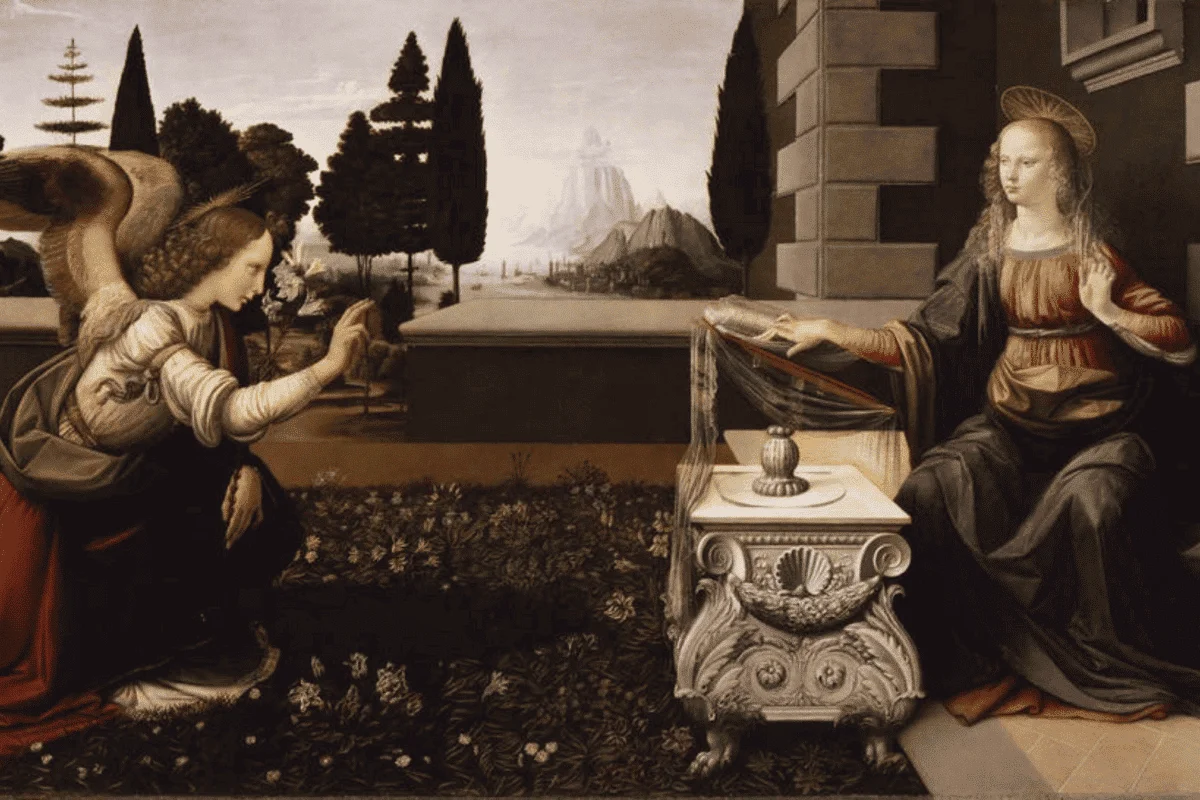
This is an oil and tempera painting on a wooden panel (98×217 cm), a youthful masterpiece by Leonardo, dated between 1472 and 1475 and housed in the Uffizi Gallery in Florence.
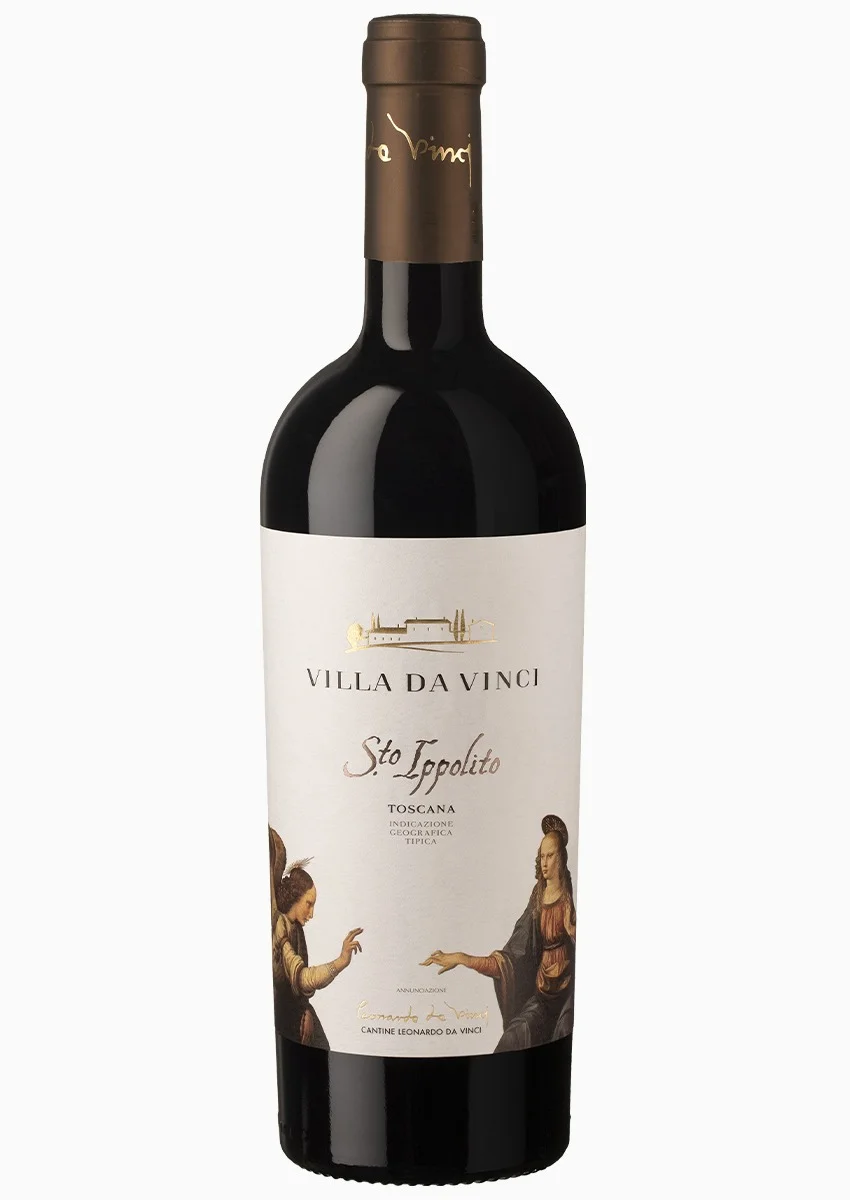
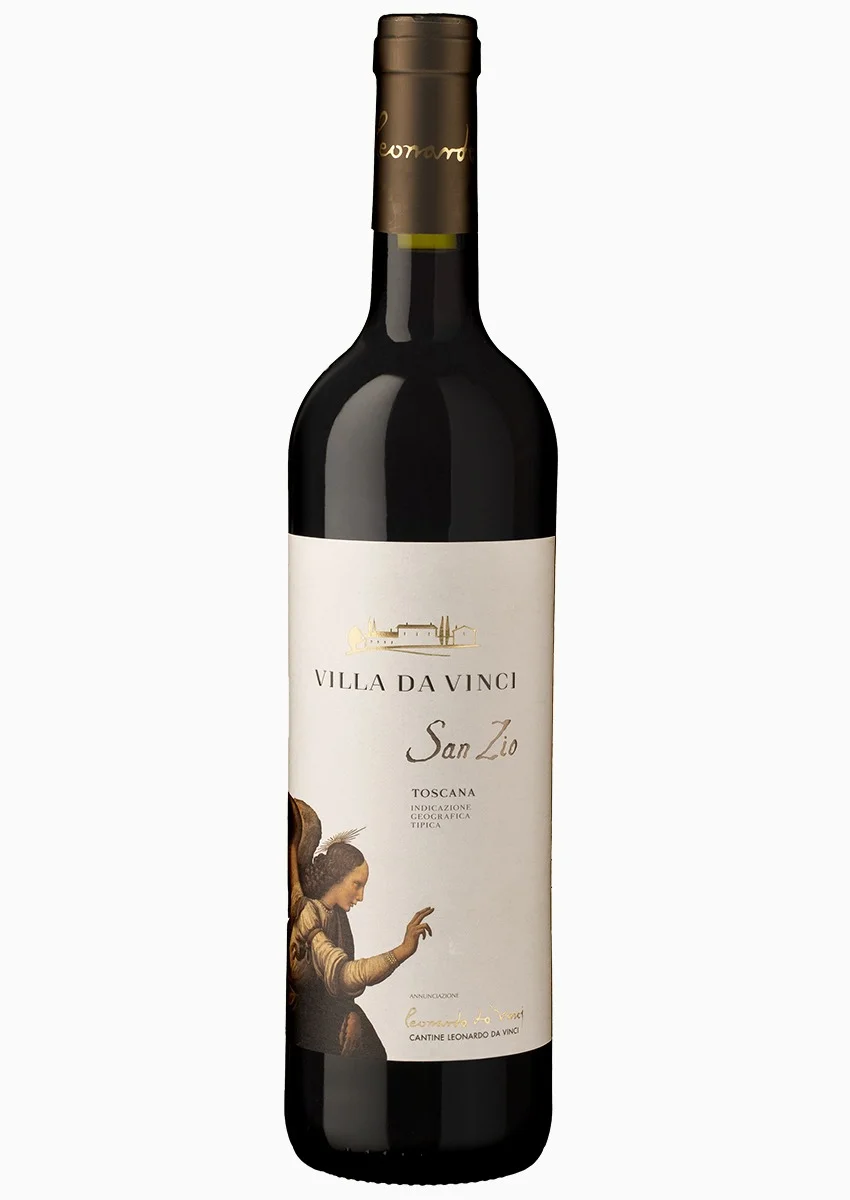
Precisely because of its iconic and symbolic value, Cantine Leonardo da Vinci chose this work to represent the Villa Da Vinci line, a collection dedicated to the estate’s Crus told through the details of the painting:
At that time, Leonardo da Vinci is a young man barely in his twenties, apprentice in Verrocchio’s workshop, and it appears that the Annunciation is one of the first commissions carried out by the Renaissance genius. The Annunciation is a masterpiece that strikes the eye for its spatial composition and the setting of the scene: Leonardo da Vinci deliberately departs from the traditional iconography of the time, placing a sacred theme such as the announcement of Christ’s birth in a naturalistic and earthly setting. The landscape is not painted following the typical fifteenth-century geometric perspective, but recedes perspectivally towards the background through subtle colour gradations amongst the contours of mountains, the river and a city glimpsed among the meticulously rendered trees.
Leonardo da Vinci set the Annunciation in an enclosed garden, a medieval outdoor setting typical for monasteries and convents of the period.
The Villa Da Vinci Collection comprises four wines (three reds and a white) that display on their labels some of the principal founding elements of the work: the Archangel Gabriel, the Virgin and the lily flower, a symbol of purity and chastity.
Beyond the sfumato tones so dear to the artist, which are discernible in the background, the drapery of the Archangel and Virgin’s garments are particularly refined and studied in their ample, soft folds, which delineate the plasticity of the depicted figures and place them realistically within the scene. Another highly realistic detail is the transparent veil that hangs over the lectern beneath the book of Sacred Scriptures that Mary is reading. Nothing is left to chance and everything is rendered with meticulous attention, as in the decorative classical elements of the lectern: from Ionic scrolls, to the festoon with fruit leaves, to the shell—a symbol of the “new Venus”, that is Mary, and of eternal beauty.
Some scholars claimed that the painting exhibits an apparent perspective error, evident in the Virgin’s right arm being longer than her left and the proportion of her legs being too short relative to her torso. Those who refute this thesis are convinced it is a deliberate choice by Leonardo himself, necessitated by an obligatory point of view: if the painting is not viewed head-on, the perspective distortions resolve themselves.

Wine guide

Food & Wine

Art & Culture

Wine guide

Food & Wine