Leonardo's connection with Romagna is so strong and present that today one can undertake an ideal journey in his company through the cities he visited during his time in Romagna.
Leonardo's connection with Romagna is so strong and present that today one can undertake an ideal journey in his company through the cities he visited during his time in Romagna.
A route from Rimini to Imola, following the inspirations and notes of the Master and admiring the architecture he himself had designed and reproduced.
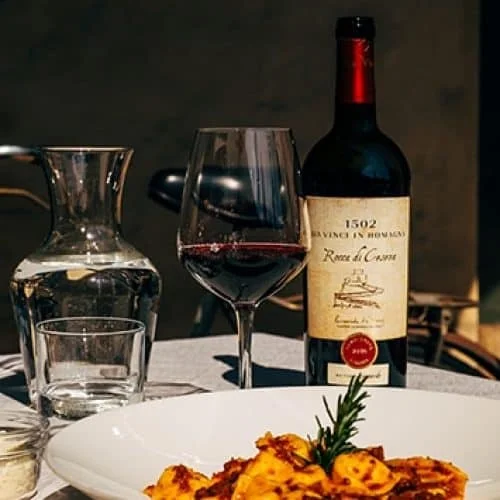
Romagna, on the occasion of the Leonardo quincentenary, commemorates the passage of the Master and the bond he established with a series of events and activities; we at Leonardo da Vinci Wineries dedicate to the Master’s period in Romagna, strongly characterised by his encounter with the territory and its agricultural and architectural aspects, a collection of wines. Thus, following his journey, 1502 Da Vinci in Romagna is the line dedicated to wines from the finest Romagna vineyards produced following the Leonardo® Method. A special tour through five cities, touching places rich in beauty: that which Leonardo captured in drawings made at each stage of his journey and reproduced on the labels.
It is the summer of 1502, when Cesare Borgia finds himself needing to defend and fortify his possessions in the new State of Romagna. For this reason he calls the finest engineer and architect known at that time: Leonardo da Vinci.
Leonardo sets out on his visit and stay in Romagna accompanied by a small pocket notebook today catalogued as Codex Atlanticus Manuscript L (held in the original at the Biblioteca dell’Institut de France in Paris), on which he notes, as a curious traveller, stage after stage, sketches, ideas, inventions, observations about Romagna. A reproduction of the notebook is displayed at the Marineria Museum in Cesenatico.
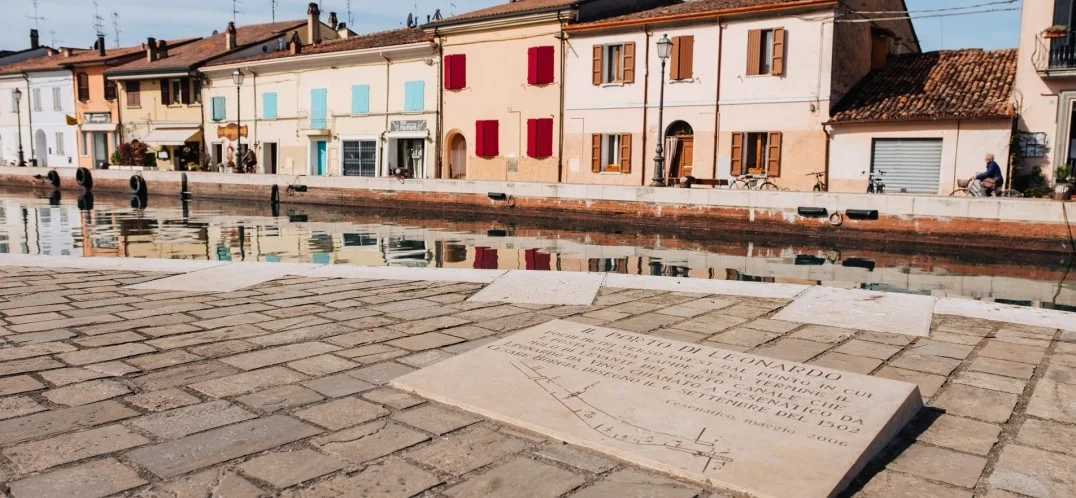
Leonardo stays and works in five strategic cities of Romagna: Rimini, Cesena, Cesenatico, Faenza and Imola, in that order.
On 8 August 1502 Leonardo arrives in Rimini, where he is enchanted by the sonic harmony of the fountain known as “della pigna” in the current Piazza Cavour, and notes: “Make harmony with the diverse falls of water, as you saw at the fountain of Rimini, as you saw on 8 August 1502”.
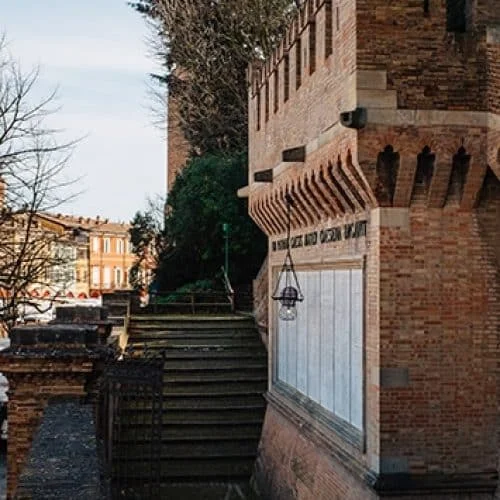
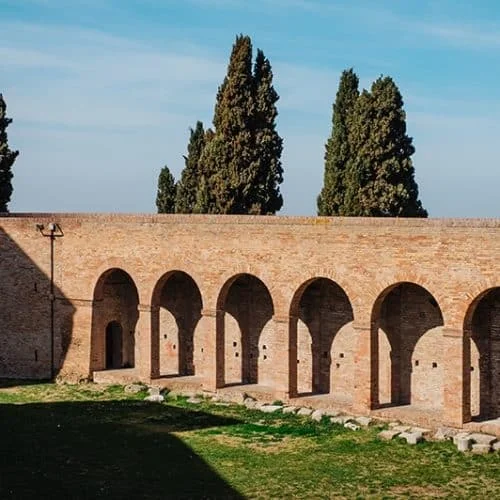
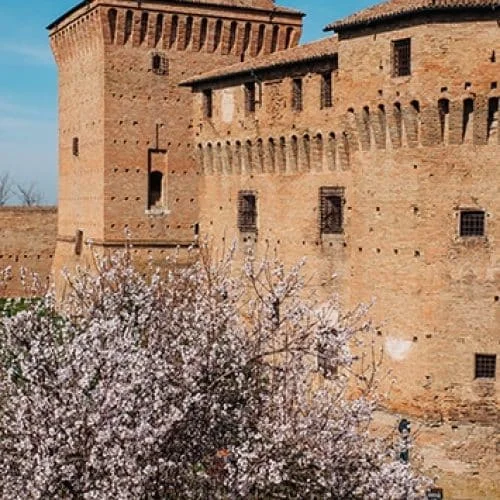
Two days later, Leonardo finds himself in Cesena, where he depicts the “Rocca di Cesena”. In the sketch he draws with a perspective plan the path to be taken to enter inside the Rocca Malatestiana, following a winding route along the slope of the Garampo hill.
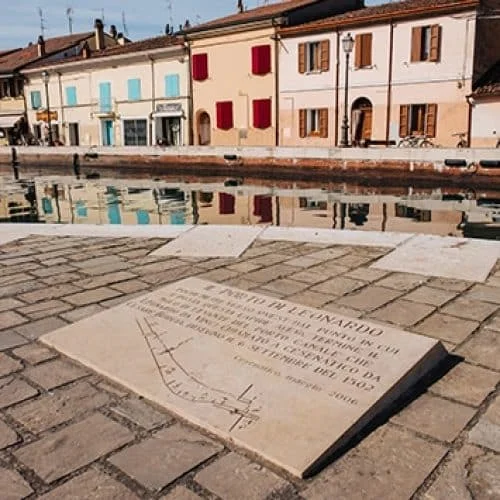
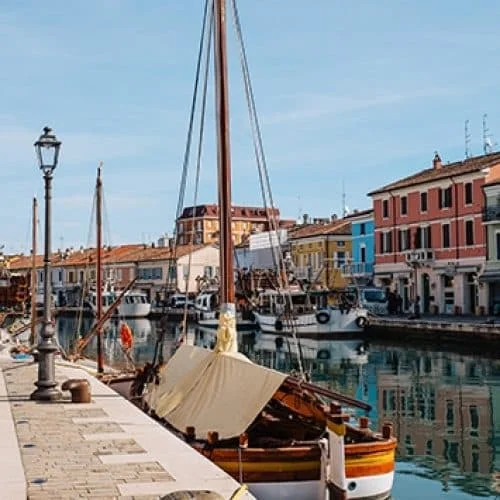
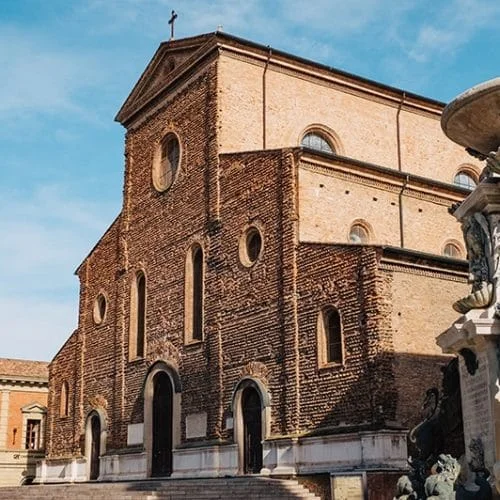
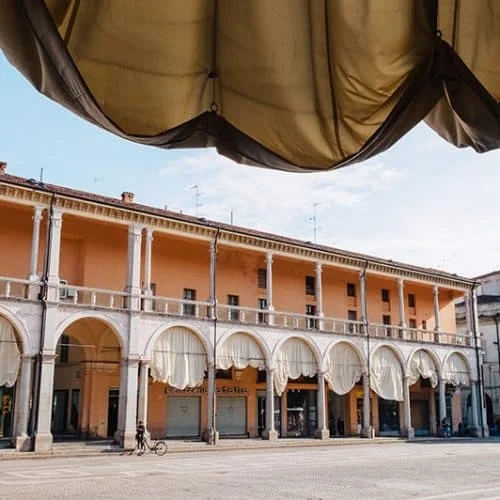
In Faenza, Leonardo pauses to admire the Cathedral, a work by Giuliano da Maiano of Fiesole, then still under construction, which he draws. He also moves around the outskirts of the city, along the Lamone valley, and describes in his notebook the peculiarity of the badlands and the earth used for Faenza ceramics. On 6 September 1502 Leonardo is in Cesenatico, where he draws a bird’s-eye view of the canal-port. He then reaches Imola, where he makes a map of the city, now held at the Royal Library of Windsor Castle. The value of the plan is both scientific and artistic, and is among Leonardo’s most singular masterpieces, the result of “surveys on the ground, research on pre-existing cartography, orchestrations in the studio, as well as philosophical theories of the universe and aesthetic experience,” writes Alessandro Vezzosi, director of the Leonardo Museums.
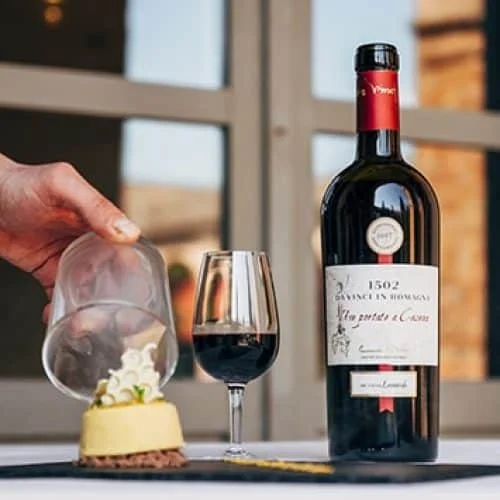
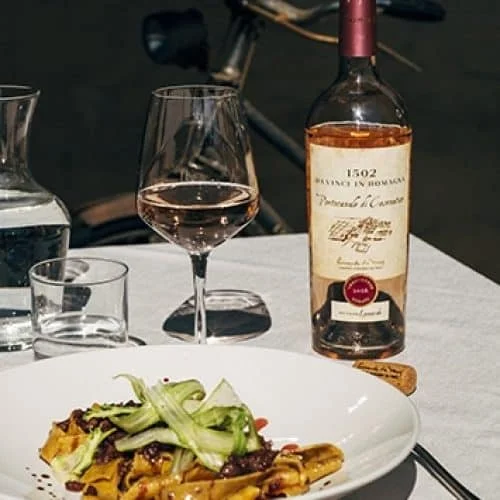
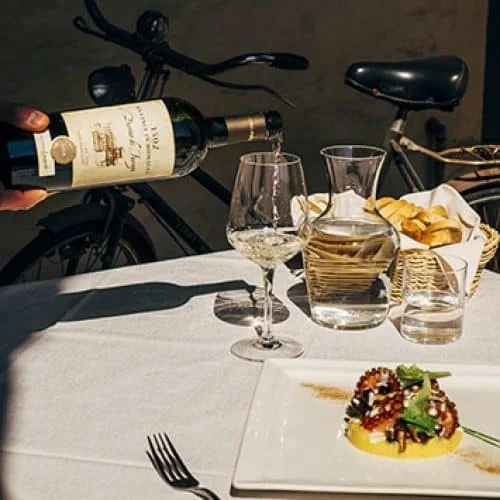
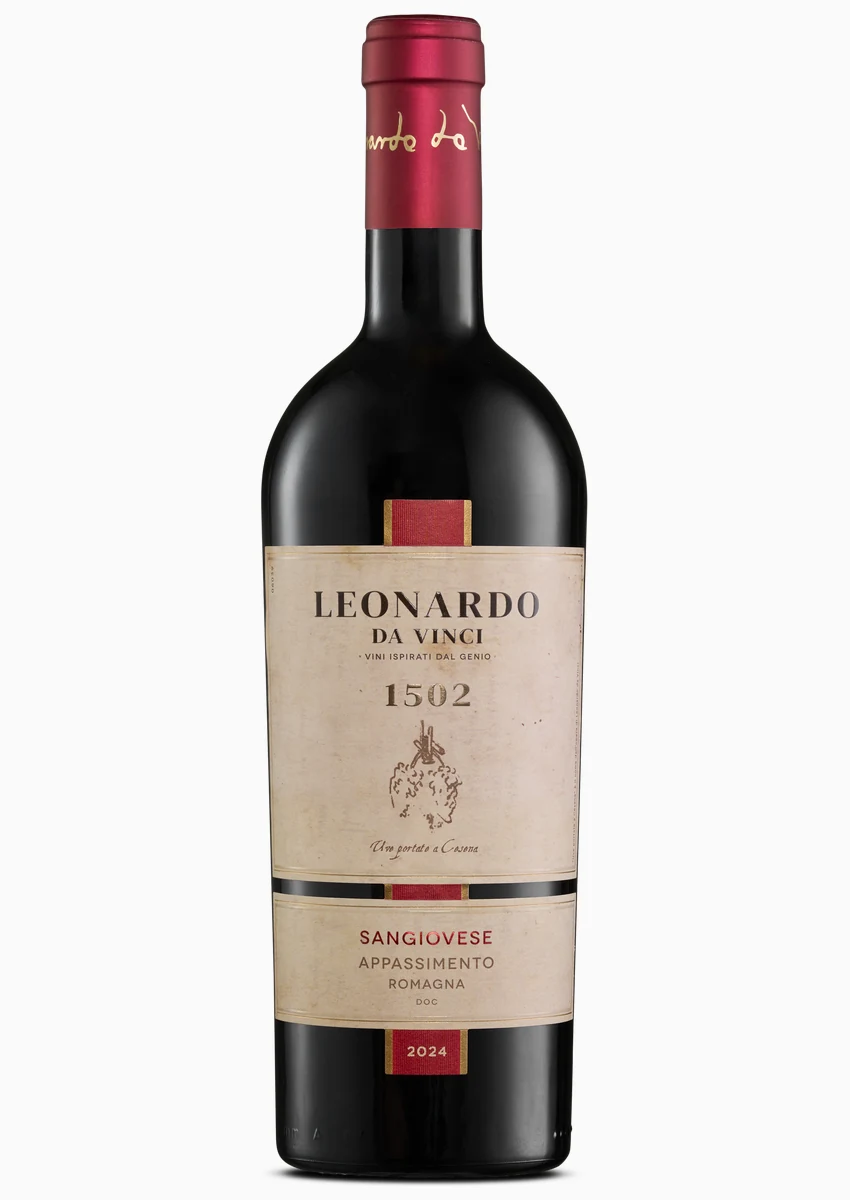
Beyond his work as an engineer and architect, Leonardo’s journey to Romagna also gave him the opportunity to deepen his technical knowledge in viticulture and oenology thanks to the widespread practice of these disciplines in the Romagna region. In Romagna, Leonardo is struck by a particular system of grape suspension that allows the clusters to dry. He captures it in a drawing of immense value to us, the Grapes dried at Cesena, namely the only sketch of a grape cluster traced by his hand and passed down to us.
Leonardo’s notes from his Romagna journey could not be transformed into works realised under his direct supervision, but they certainly formed the basis of the complete reorganisation of the Romagna fortifications in the cities he visited, of the realisation of the buildings, complexes and infrastructure that took place in Romagna in the years following his visit.
Notes that are exemplary masterpieces for the integration of art, geology, hydrography, cartography and geometry, and which remain today an exemplary and current framework for exploring the territory.

Wine guide

Food & Wine

Art & Culture

Wine guide

Food & Wine