





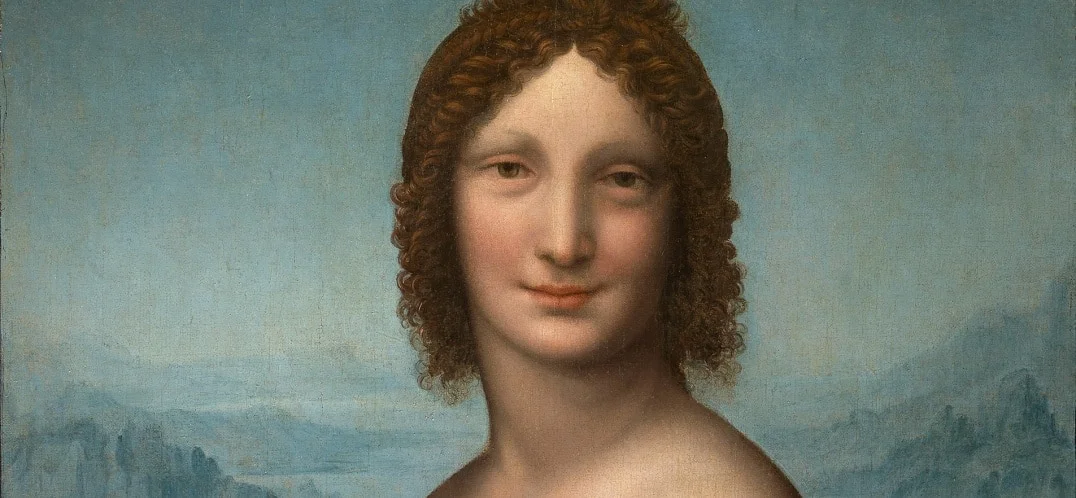
The Museo Ideale Leonardo da Vinci's collection is enriched by a unique and captivating work that opens new perspectives on the Genius's labour: la Gioconda Nuda.
The Museo Ideale Leonardo da Vinci's collection is enriched by a unique and captivating work that opens new perspectives on the Genius's labour: la Gioconda Nuda.
Art historians David A. Brown and Konrad Oberhuber defined the Nude Mona Lisa as “Leonardo’s final pictorial invention” in 1978. The version on display at the Museo Ideale Leonardo da Vinci, presented with a series of new historical, artistic and scientific insights, is considered one of the two most important versions of the Nude Mona Lisa.
It is a work attributed to one of Leonardo’s favourite pupils – Salai or Melzi – based on the master’s concept from the Chantilly drawing, datable to 1513–1517 and executed in Leonardo’s workshop.
With a recent discovery – as Alessandro Vezzosi, director of the Leonardo Museums, points out – scientific examination by laboratories in France (C2RMF) and Italy (Editech) has revealed that this painting contains pounce dots that correspond exactly to the holes visible in the Chantilly drawing held by the Musée Condé, now attributed to Leonardo and his workshop.
During 2019, the Museo Ideale’s Nude Mona Lisa was indeed displayed at the Musée Condé opposite the drawing from which it derived, alongside another celebrated and prestigious version: that from the Hermitage Museum in Saint Petersburg, formerly attributed to Leonardo and now attributed chiefly to Salai.
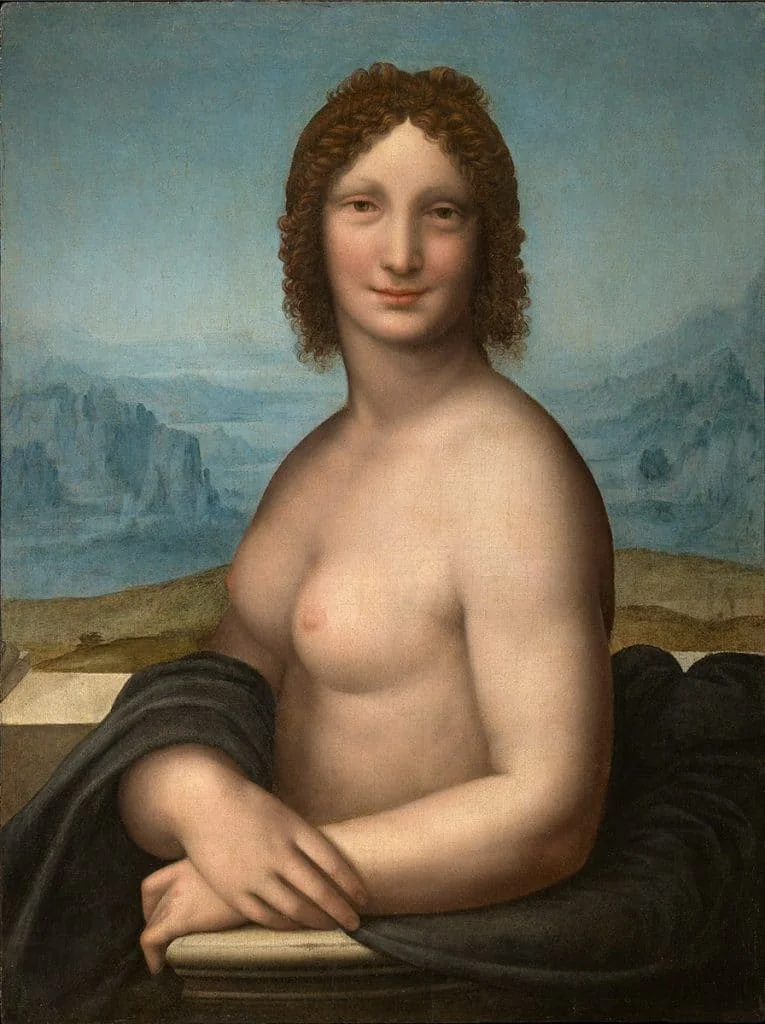
This Museo Ideale version was also previously known as “Portrait of a Nude Woman by Leonardo da Vinci”. Rediscovered in 2009, in recent years it has been exhibited in museums from Miami to Tokyo.
The work is on display at the Museo Ideale Leonardo da Vinci as part of the Leonardo Vive exhibition. Further proof of an inexhaustible Genius whose artistic production continues to provide ever new perspectives for study and knowledge.

Wine guide

Food & Wine

Art & Culture

Wine guide

Food & Wine