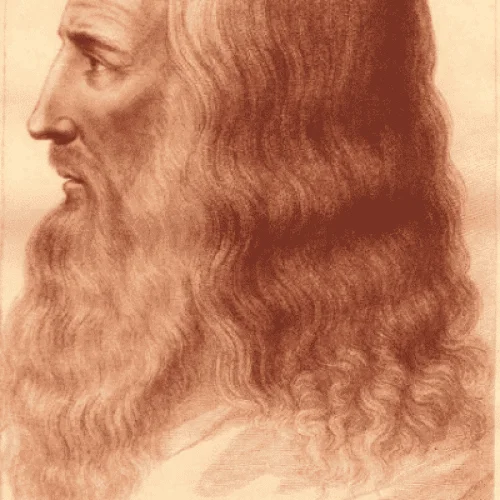
There are many curiosities about Leonardo da Vinci, from when he learned to draw and paint, with a marked propensity towards the study of every form of knowledge; endowed with extreme wit and intelligence, he is remembered for his research in the field of anatomy, engineering and architecture for his curiosity and spirit of observation, so much so that he was nicknamed as “the genius”.
From a very young age Leonardo approached the world of art, then went on to other disciplines. Leonardo enjoyed architecture, theatre, sculpture, cartography and always returned to art. It was in 1503 that he began to paint the Gioconda, perhaps his most famous painting and certainly the one that arouses the most curiosity. Among the curiosities surrounding Leonardo da Vinci’s Gioconda, certainly there is that about the identity of the girl portrayed and her enigmatic smile.
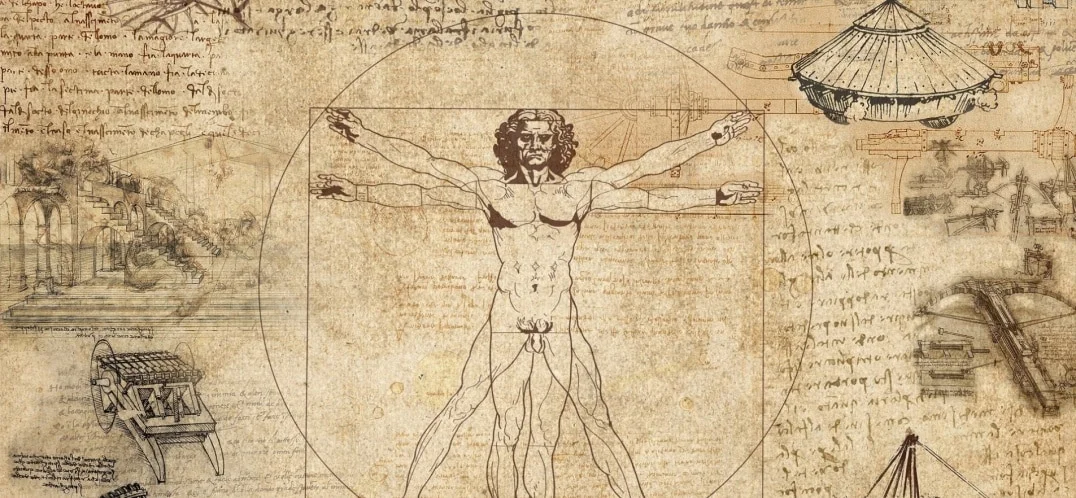
Leonardo’s talents are many: among these are strong qualities in the field of mathematics and science, he begins a spasmodic study and research on fossils, not neglecting anatomy and the study of flight. He was the first to understand the correct functions of the heart and its mechanisms, intuiting that it had the function of a pump, thus changing subsequent studies and treatises on anatomy. He represented, or rather was the first to well represent, human anatomy, taking care to dissect human and animal bodies during the final years of the fifteenth century.
An intellect always in continuous evolution, eager to know, in the early years of the sixteenth century he dedicated himself completely to engineering, his drawings recall modern and advanced objects: the most well-known invention is probably the flying machine that is based on the physiology of a bat. He concentrated on the mechanics of flight and the possible implications for the contemporary world. A multifaceted, Renaissance man and hungry for knowledge, his research and studies were all interconnected.