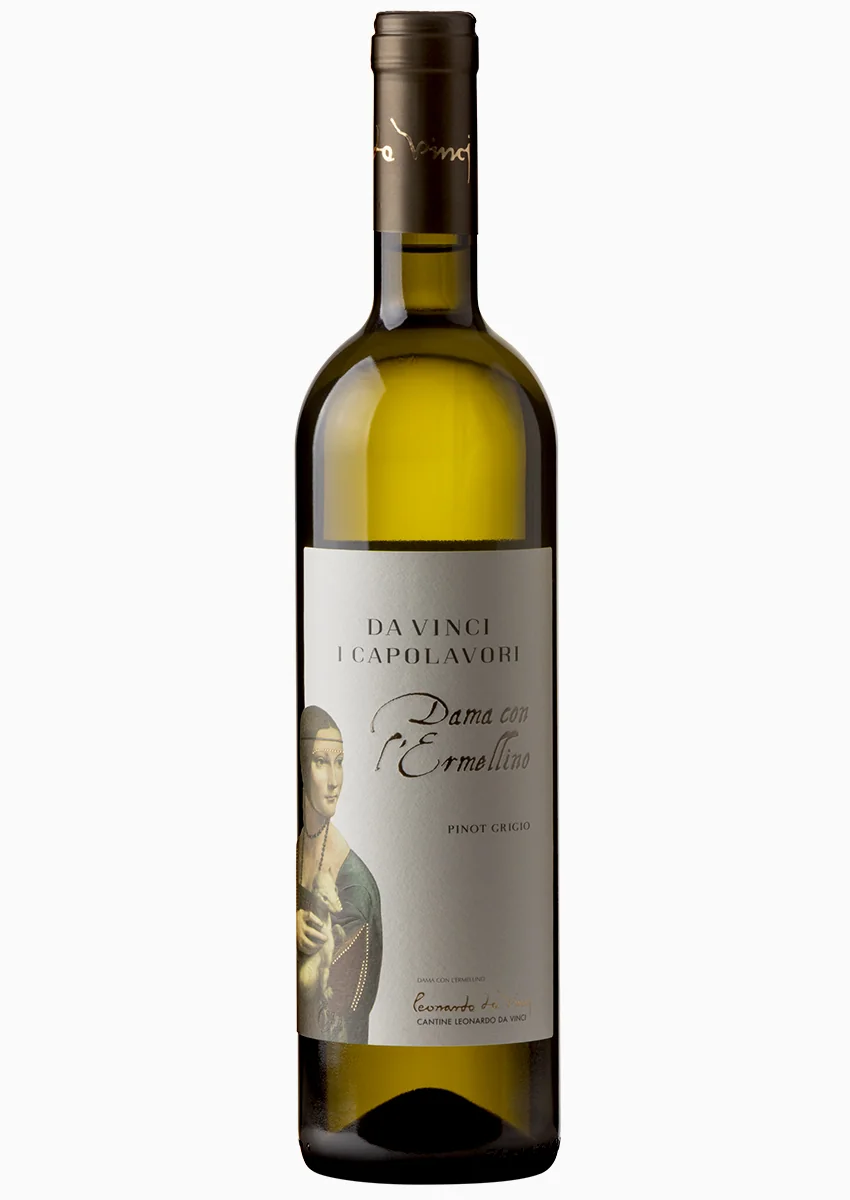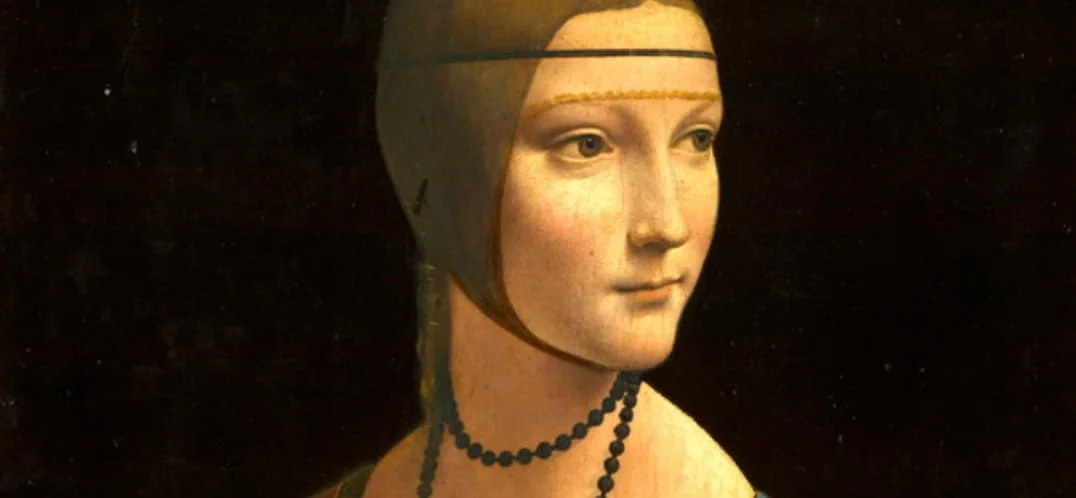
The painting “Lady with an Ermine” by Leonardo da Vinci is one of the great masterpieces of the genius,
symbol of the extraordinary artistic level reached by Leonardo during his first stay in Milan, between 1482 and 1499.
The painting “Lady with an Ermine” by Leonardo da Vinci is one of the great masterpieces of the genius,
symbol of the extraordinary artistic level reached by Leonardo during his first stay in Milan, between 1482 and 1499.
This is an oil on panel painting (approximately 54×40 cm) datable around 1488 and 1490, part of the private collection of the Princes Czartoryski until 2016, subsequently displayed at the National Museum of Krakow until 2019, the year it returned to the Czartoryski Museum, one of Poland’s foremost museums.
Leonardo scholars have long puzzled over the identity of the young woman depicted in the painting and, what is rather peculiar, why she holds an ermine in her arms.
Well, it appears that the work connects to Cecilia Gallerani, a noble woman of keen intellect, and the mistress of Ludovico Maria Sforza, called “Il Moro”, regent of the Duchy of Milan during the Renaissance period. Ludovico Il Moro was a renowned patron for many talented artists of his age, including Leonardo da Vinci himself (to whom he commissioned the Last Supper).
But why the ermine, you might ask? Well, the Duke of Milan received the prestigious honourary title of Knight of the Order of the Ermine from the King of Naples, Ferdinand I of Aragon, in 1488. A far from subtle symbolism, if one considers that in Greek the ermine is called “galè” and its presence in the painting would thus connect the clue to the girl’s surname.
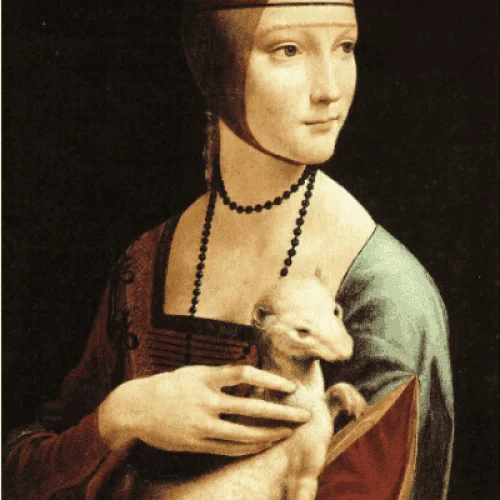


Beyond the unusual pose of the young woman (a novelty for the tradition of Lombard portraiture, represented mainly in profile), the admirable mastery of the Genius lies in the minuteness of detail in the hairstyle, in the costumes typical of the Sforza court, but above all in the subtle affinity of traits between the lady and the ermine. Two slender and ethereal figures: she with her diaphanous complexion, the animal with its luminous coat; their intense and enigmatic gazes, both turned in the same direction.
Great emphasis is given to the movement of the hand, in the foreground and bathed in light as it caresses the animal with tapered fingers, to underscore the grace and purity of Cecilia, then just sixteen years old, whilst an imperceptible smile plays upon the young woman’s lips: the same smile we can observe in the St. John the Baptist and in the Mona Lisa.
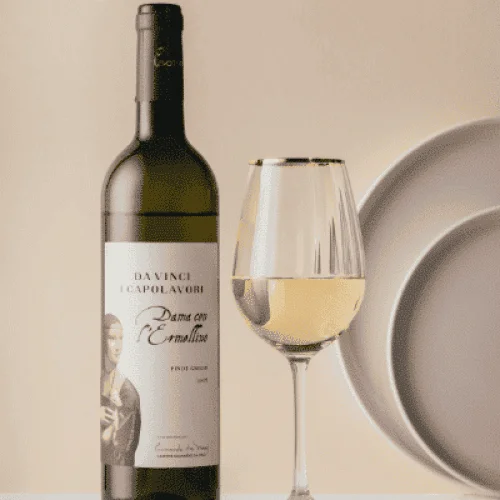
Leonardo da Vinci’s work “Lady with an Ermine” tells the world the virtuosities of the Genius and the elegance of the Renaissance, all embodied in a representation of grace and refinement. Just as the ermine and the young woman are identified by common traits, so too does the Pinot Grigio Lady with an Ermine from Cantine Leonardo da Vinci wish to emphasise the sophistication of the painting, honouring the Genius of Leonardo and his life, understood as an infinite adventure amongst art, science and nature.
Enveloping, like the touch of the Lady. Fresh, like her slender and timeless appearance. Intriguing, like her luminous charm that renews itself with every glance, with every sip. This Pinot Grigio wine is a privilege to admire and taste firsthand.

Wine guide

Food & Wine

Art & Culture

Wine guide

Food & Wine